
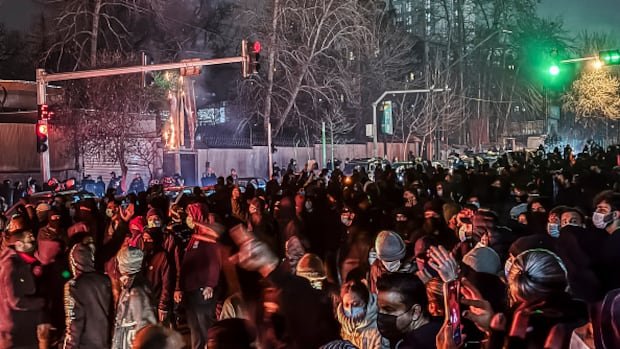
Iran’s state broadcaster has accused the United States of instigating and leading the recent violent protests in the country. The official narrative from the clerical regime blames the U.S. for orchestrating the “terrorist actions” that have unfolded during the demonstrations. The protests began on Dec. 28 when merchants at Tehran’s Grand Bazaar expressed discontent over Iran’s worsening economic crisis and the steep decline of the national currency, the rial.
The unrest quickly spread across Iran as citizens, tired of years of repression and limitations, took to the streets in defiance. Most of Iran’s 90 million people have been cut off from the internet for nearly a week, hindering communication with loved ones and the outside world. The government’s crackdown on dissent has intensified, with reports of over 2,500 deaths and numerous arrests during the protests.
Security forces have used various tactics, including motorcycles, armored vehicles, and water cannons, to quell the demonstrations. The protests have seen unprecedented levels of participation from different segments of society, resulting in widespread violence and damage to public and private property. The escalating tensions have prompted concerns about the regime’s stability and the potential for further escalation.
The Iranian government has banned the use of Starlink satellite internet systems, making it difficult for Iranians to communicate with the outside world. President Trump’s remarks about potentially sending more satellite kits to Iran have heightened tensions between the two countries. Meanwhile, human rights groups have reported security forces seizing satellite dishes to limit access to foreign media.
In a defiant speech, Iran’s Supreme Leader Ayatollah Ali Khamenei labeled the protesters as troublemakers seeking to please the U.S. president. President Trump has condemned the regime’s violent response to the protests and hinted at possible repercussions. The Iranian people are cautiously optimistic about external intervention, with some hoping for a revolutionary change while others remain wary of the regime’s resilience and the pervasive atmosphere of fear and uncertainty.