
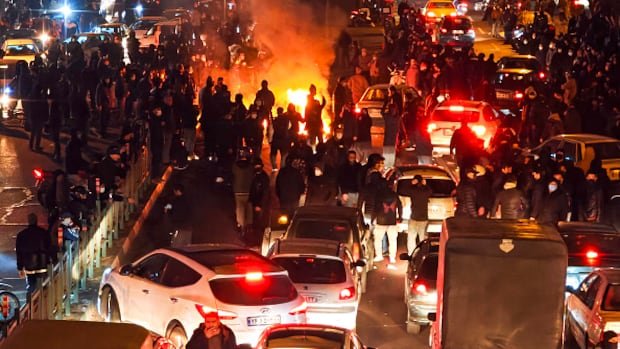
Iran’s recent violent suppression of nationwide protests has resulted in a death toll of over 6,000 individuals, with concerns that additional casualties may still be unaccounted for, according to activists. Concurrently, the Iranian rial plummeted to an all-time low of 1.5 million to $1 US. This development coincided with the deployment of the USS Abraham Lincoln aircraft carrier and accompanying guided missile destroyers to the Middle East, enhancing the U.S.’s military readiness to potentially engage with Iran, especially as Gulf Arab states have expressed reluctance to participate in any military actions despite hosting American forces.
In response to U.S. President Donald Trump’s warnings of military intervention following violent crackdowns on peaceful demonstrators and potential mass executions by Tehran, two Iranian-supported militias in the Middle East have signaled their readiness to initiate new assaults, ostensibly in solidarity with Iran. The country has issued threats of escalating regional conflict, despite its military and air defenses still recovering from Israel’s military strikes in June. The ongoing economic pressures, exacerbated by the devaluation of the rial, may fuel further unrest among the population if Trump opts for aggressive measures against Iran.
A private security firm, Ambrey, released a statement indicating that the U.S. possesses adequate military capabilities to conduct offensive operations against Iran while safeguarding itself and its allies from potential retaliatory actions. While supporting or seeking retribution for Iranian protesters through punitive strikes is deemed insufficient justification for prolonged military engagement, the degradation of Iranian military capabilities could raise the likelihood of limited U.S. involvement.
The updated death toll figures, reported on Tuesday by the U.S.-based Human Rights Activists News Agency, revealed a staggering count of 6,159 fatalities, including protesters, government forces, children, and civilians. The crackdown has also led to over 42,200 arrests, underscoring the severity of the situation. The authenticity of these figures remains challenging to verify independently due to internet disruptions and restrictions imposed by Iranian authorities.
Iran’s official death toll stands at 3,117, with the government categorizing the deceased as civilians, security personnel, and “terrorists.” Historically, Iran has downplayed or omitted casualties from protests and unrest, making the current toll the highest in decades and reminiscent of the tumultuous period surrounding the 1979 Islamic Revolution. The protests erupted in late December following economic woes and swiftly spread nationwide, prompting a violent response from Iranian authorities, compounded by an extensive internet blackout.
Iran’s influence across the Middle East, primarily through the “Axis of Resistance” network comprising proxy militant groups in various regions, has faced significant challenges, particularly after Israeli military actions targeting key entities. The geopolitical landscape has witnessed shifts, including the ousting of Syria’s Bashar al-Assad in 2024, supported by Iran during a prolonged conflict. The threat of resuming hostilities by Iranian-backed groups in Yemen and Iraq underscores the volatile regional dynamics amid escalating tensions.
Despite accusations by Iranian state media attributing the unrest to external forces, domestic grievances persist due to economic hardships exacerbated by international sanctions, notably linked to Iran’s nuclear program. The devaluation of the rial has further strained the populace, prompting limited government measures to alleviate financial strain, albeit insufficient to address the deep-rooted economic challenges faced by Iranians.
As uncertainties loom over potential U.S. actions and regional responses, the situation in Iran remains volatile, with implications reverberating across the Middle East and beyond.