
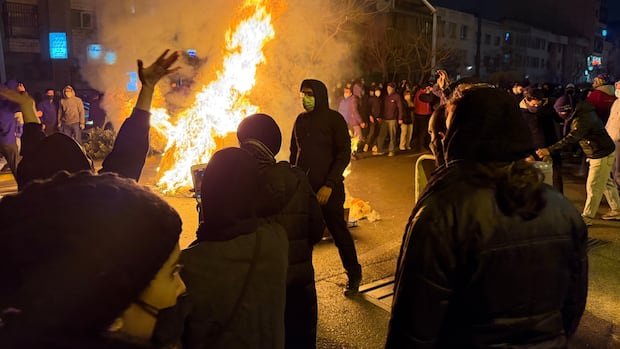
After a prolonged internet blackout in Iran, accurately documenting the protests from overseas has been challenging. However, following the partial restoration of communications on Tuesday, The Associated Press managed to establish contact with individuals in the country who were observing and participating in the demonstrations.
The protests initially sparked over Iran’s struggling economy over two weeks ago and quickly shifted focus towards the theocracy, particularly targeting 86-year-old Supreme Leader Ayatollah Ali Khamenei. Images captured in Tehran during the recent demonstrations revealed graffiti and chants advocating for Khamenei’s demise, an act punishable by death.
Skylar Thompson from the Human Rights Activists News Agency (HRANA) expressed shock at the reported death toll exceeding 2,000 individuals linked to the protests, a number four times higher than the Mahsa Amini protests in 2022, which lasted several months. Thompson cautioned that the death toll is likely underestimated and could rise further.
Subsequently, HRANA updated the death toll to at least 2,571 individuals. Witnesses who had been cut off from external communication described a heavy security presence in central Tehran, including damaged government buildings, vandalized bank machines, and a significant police and military presence.
Despite some individuals managing to contact the AP in Tehran, attempts to return calls from the AP bureau in Dubai were unsuccessful. Witnesses reported ongoing restrictions on text messaging and internet access limited to government-approved websites within Iran. They detailed a militarized environment with anti-riot police, Revolutionary Guard members, and plainclothes security officials patrolling the streets.
Numerous banks and government offices were reportedly set ablaze during the unrest, impacting financial transactions due to the internet outage. While shops in Tehran were open, foot traffic was minimal. Witnesses recounted being forced to resume business operations by security forces, a directive unacknowledged by Iranian state media.
Concerns arose among the populace regarding potential future developments, including a speculated U.S. intervention following President Donald Trump’s comments on the Iranian protests. Amidst these circumstances, individuals were apprehensive about heightened tensions and the impact on their safety.
Furthermore, security personnel were reportedly targeting Starlink terminals in northern Tehran, leading to raids on properties with satellite dishes. Despite the illegality of satellite television dishes, many residents possess them, with authorities historically lax in enforcement. Notably, a Los Angeles-based activist confirmed that Starlink was offering free internet service in Iran, corroborated by other online sources.
Additionally, pro-government rallies were commended by Khamenei through a statement broadcasted on state TV, lauding participants for their loyalty and condemning foreign interference. The televised demonstrations featured chants denouncing America, Israel, and perceived enemies of Iran.
In conclusion, the evolving situation in Iran reflects a complex landscape of dissent, security measures, and geopolitical dynamics, underscoring the ongoing challenges faced by the Iranian population amidst civil unrest and government responses.