
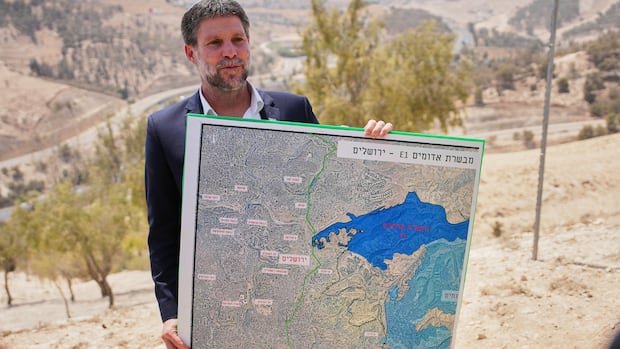
Israel has overcome the final obstacle to initiate the construction of a controversial settlement project near Jerusalem that would effectively divide the occupied West Bank in two, as per a government tender. The tender, inviting bids from developers, paves the way for commencing the E1 project. Peace Now, an anti-settlement monitoring group, was the first to report the tender. Yoni Mizrahi, who heads the group’s settlement watch division, mentioned that initial work could kick off within the month.
The development of settlements in E1, a vast area of land east of Jerusalem, has been under consideration for over two decades but was put on hold due to U.S. pressure in previous administrations. The global community widely regards Israeli settlement construction in the occupied West Bank as illegal and a hindrance to peace. The E1 project is particularly contentious as it extends from the outskirts of Jerusalem deep into the occupied West Bank, with critics arguing that it would hinder the formation of a contiguous Palestinian state in the region.
Israeli Finance Minister Bezalel Smotrich, a far-right politician overseeing settlement policy, has long advocated for realizing the plan. In August, when Israel granted final approval to the project, Smotrich stated, “The Palestinian state is being erased from the table not with slogans but with actions.” The tender, accessible on Israel’s Land Authority website, calls for proposals to develop 3,401 housing units. Peace Now noted that the release of the tender signifies an accelerated push to advance construction in E1.
Additionally, on Tuesday, Syrian and Israeli officials convened in Paris for U.S.-mediated talks aimed at brokering a security agreement to ease tensions between the two nations. A joint statement following the meeting emphasized respect for Syria’s sovereignty, Israel’s security, and prosperity for both countries. They agreed to establish a joint communication cell, a specialized operational center, to facilitate immediate and ongoing coordination on intelligence sharing, military de-escalation, diplomatic engagement, and commercial opportunities under U.S. supervision.
Talks between the parties primarily revolve around the withdrawal of Israeli forces and a return to the 1974 agreement. Israeli Prime Minister Benjamin Netanyahu’s office underscored the significance of ensuring security for its citizens, preventing threats on its border, and safeguarding the Druze minority in Syria, which also constitutes a significant minority in Israel.
Meanwhile, according to the Palestinian Red Crescent, 11 individuals sustained injuries during an Israeli incursion at a university in the West Bank. The president of Birzeit University denounced the incursion, stating that Israeli military vehicles stormed the campus gate and displayed brutality. Israeli officials indicated that military and border troops were dispatched to disperse an anticipated gathering, where they encountered a crowd allegedly engaging in violence, leading to targeted fire towards the main instigators.