
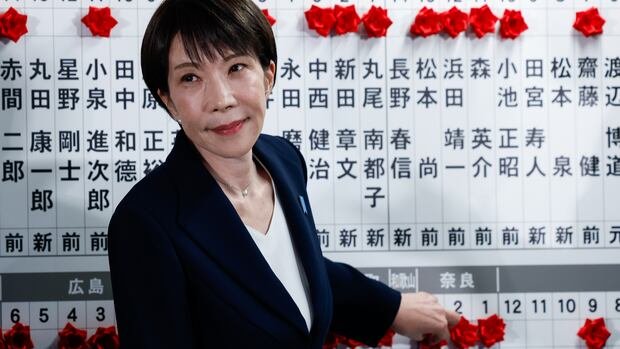
In a significant parliamentary election on Sunday, the ruling party led by Prime Minister Sanae Takaichi achieved a substantial victory, securing a two-thirds supermajority. Preliminary results reported by Japanese media highlighted the overwhelming success attributed to Takaichi’s popularity.
Following her resounding win, Takaichi expressed readiness to implement policies aimed at strengthening and advancing Japan’s prosperity in a televised interview with NHK, the public television network. NHK’s vote count results revealed that Takaichi’s Liberal Democratic Party (LDP) alone obtained 316 seats by early Monday, surpassing the required 261-seat absolute majority in the 465-member lower house, marking a historical milestone since the party’s inception in 1955.
The ruling coalition, comprising Takaichi’s LDP and the Japan Innovation Party (JIP), secured a total of 352 seats, with 36 seats won by the JIP. Despite not holding a majority in the upper house, Takaichi’s strengthened position in the lower house is poised to propel her right-wing agenda forward, focusing on enhancing Japan’s economic and military capacities amid escalating tensions with China and efforts to foster relations with the United States.
Takaichi emphasized her willingness to collaborate with the opposition while steadfastly advancing her policy objectives. The prime minister’s popularity has been instrumental in the party’s success, despite past financial and religious controversies faced by the long-standing LDP. The strategic decision to call for an early election after just three months in office reflects Takaichi’s aim to address these challenges and leverage her current high approval ratings.
The electoral victory underscores Takaichi’s push towards conservative policies, resonating with supporters seeking a shift away from liberal ideologies. The prime minister’s agenda includes significant reforms in Japan’s security, immigration, and other key areas. Collaborating with JIP leader Hirofumi Yoshimura, Takaichi aims to accelerate these policy changes, aligning with the growing trend of right-wing populism in the country.
Looking ahead, Takaichi’s immediate priorities include finalizing a budget bill to support economic measures, tackling rising costs and stagnant wages. Additionally, she plans to revise security and defense policies to enhance Japan’s military capabilities, address foreign policy challenges, and respond to pressures from international partners like the United States.
While Takaichi’s conservative stance may raise concerns about civil rights and diplomatic relations, she is expected to maintain a cooperative approach with countries like South Korea. However, any attempts to amend Japan’s pacifist constitution or bolster military capabilities could strain regional dynamics, particularly given historical tensions in the region.
As Takaichi embarks on her new term without facing another election until 2028, she aims to navigate the complexities of policy implementation while balancing domestic and international expectations. Sunday’s election outcome reflects a broader trend in Japanese politics where electoral strategies often overshadow substantive policy reforms, according to political analysts. The election day coincided with snowfall across Japan, including Tokyo, with northern regions experiencing record snowfall impacting daily life nationwide.