
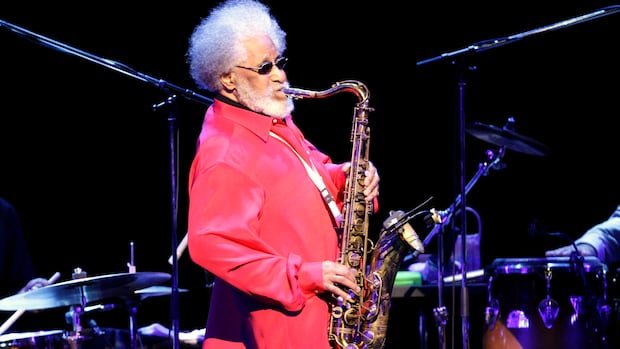
Sonny Rollins, the innovative and influential tenor saxophonist known for his unique tone and continuous musical exploration across over five decades, passed away at 95 years old on Monday. Rollins’ spokesperson, Terri Hinte, confirmed his death at his residence in Woodstock, N.Y., without specifying the cause but mentioning his restricted mobility in recent years due to health issues.
From his early days as a prodigious teenager to his diverse solo projects and ventures into free jazz, Rollins was highly respected for his improvisational prowess. Regarded as one of the last luminaries of the bebop era, alongside John Coltrane and Charlie Parker, he made a lasting impact as a saxophonist.
Rollins’ musical talent reached a broader audience when his poignant saxophone solo featured on the Rolling Stones’ 1981 album “Tattoo You” in the track “Waiting on a Friend,” inspired by Mick Jagger’s dancing.
Despite his enduring success, Rollins remained a relentless experimenter, often taking breaks from performing and exploring varied musical styles. He viewed himself as a perpetual learner, always seeking growth and evolution in his artistry.
In the 1990s and 2000s, Rollins garnered critical acclaim with several well-received albums, maintaining a rigorous practice routine and touring well into his 80s. Pulmonary fibrosis eventually led to his retirement, with his final performance in 2012 and complete cessation from playing in 2014.
Rollins’ dedication and discipline were recognized with Grammy awards for his albums, including “This is What I Do” in 2001 and “Why Was I Born?” in 2006. His commitment to music was exemplified by his performance at the “Without a Song: The 9/11 Concert,” which took place shortly after the September 11 attacks.
Overcoming struggles with heroin addiction in his youth, Rollins underwent a transformative experience that deepened his perspective on life. His resilience led him to significant musical milestones, including the iconic album “Saxophone Colossus” in 1956 and pioneering works like “Way Out West,” “A Night at the Village Vanguard,” and “Freedom Suite.”
Rollins’ hiatus from the music scene in the early 1960s, during which he embraced the evolving sound of free jazz, marked a pivotal moment in his career. Despite a shift in musical trends, he continued to push boundaries and challenge conventions, solidifying his status as a living legend in the jazz world.
Throughout his remarkable journey, Rollins’ passion for music, unwavering dedication, and profound impact on the jazz genre will forever be remembered.