
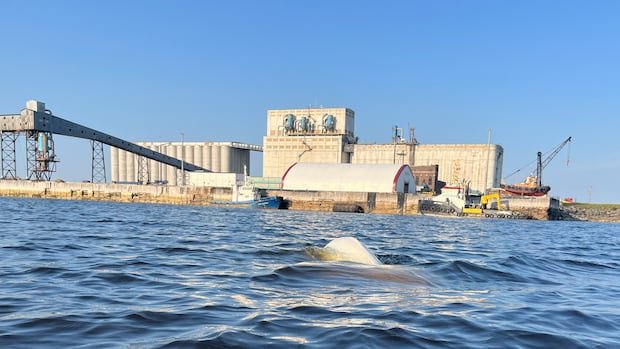
Manitoba and Canada are exploring the concept of establishing a new national marine park along Manitoba’s Hudson Bay coast. Manitoba Premier Wab Kinew disclosed a $250,000 provincial funding commitment in Churchill for a study to assess the viability of a new national marine conservation area. Federal support, mainly covering the study costs, will be provided by the government, in collaboration with Indigenous communities.
National marine conservation areas are protected areas designated by the federal government along freshwater or marine coastlines, encompassing the seabed and water column, and sometimes including islands, estuaries, and coastal wetlands. Managed by Parks Canada, these areas aim to showcase the nation’s diverse marine ecosystems, much like national parks represent terrestrial ecosystems.
Currently, there are five national marine conservation areas in Canada, including Lancaster Sound in Nunavut, the southern peninsula of Haida Gwaii in British Columbia, the St. Lawrence Seaway in Quebec, and areas in Ontario’s Lake Superior and Lake Huron. The federal government plans to establish 10 more such areas by 2030, with only six potential sites identified, one of which could cover Ontario’s Hudson Bay and James Bay coastlines adjacent to Manitoba.
Various environmental groups, such as the Canadian Parks and Wilderness Society and Oceans North, have urged Ottawa to designate a marine conservation area in Manitoba that could protect part or all of the Hudson Bay coastline stretching between Nunavut and Ontario borders. This move could safeguard a significant portion of the beluga whale habitat, as noted by Chris Debicki, Vice President of Oceans North.
Supporting a marine conservation area could help assuage some critics of Premier Kinew’s exploration of transporting oil or natural gas through the Port of Churchill via Hudson Bay. Kinew emphasized the coexistence of economic development and environmental protection, stating a commitment to safeguard the waters while pursuing commercial growth.
However, not everyone shares the same perspective. Eric Reder from the Wilderness Committee of Canada expressed support for a new marine conservation area and enhanced development at the Port of Churchill but strongly opposed shipping oil and gas through sub-Arctic waters, vowing to resist such endeavors.
According to Parks Canada, commerce and marine conservation areas can harmoniously coexist, with designated zones permitting commercial activities while restricting boat traffic in ecological preservation areas. In all new national marine conservation areas, four industrial activities are prohibited, including seabed mining, dumping and bottom trawling, and oil and gas exploration.