
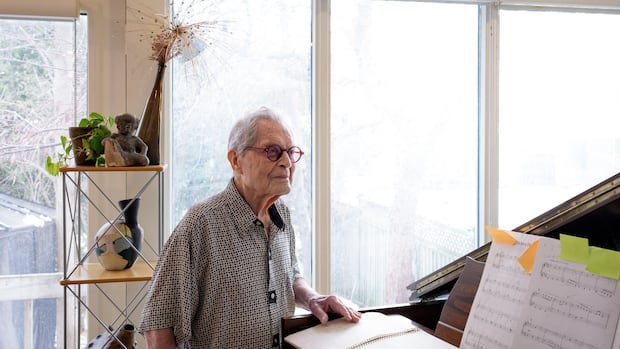
Morry Kernerman, an accomplished violin prodigy, memorizes YouTube recordings of classical music, enjoys hikes in a hilly ravine with his son, and volunteers to teach music in South America. Approaching his 101st birthday next week, Kernerman attributes his long and active life to the profound impact of music.
Identified as a superager, individuals aged 80 or older who exhibit memory abilities akin to those in their 40s or 50s, Kernerman is part of the SuperAging Research Initiative investigating the factors that contribute to their cognitive sharpness and resilience to age-related decline.
Leading the national initiative in Canada is Angela Roberts from Western University, with a goal to recruit 500 superagers from across the U.S. and Canada. Preliminary observational findings from the international team, including brain scans of superagers, reveal three key elements for prolonged independence and vitality: engaging in meaningful hobbies, staying physically active, and nurturing social connections.
Research conducted as part of the SuperAging Research Initiative suggests that the brains of superagers exhibit slower decline compared to their peers, as indicated by MRI scans showing preserved memory and focus areas. Angela Roberts emphasizes that superagers’ brains show resilience and do not experience the typical thinning of the cortex associated with memory and behavior changes.
Moreover, superagers’ involvement in society and their commitment to activities that demand cognitive engagement, problem-solving, and emotional well-being are highlighted as essential components contributing to their exceptional cognitive health.
Kernerman, whose musical journey began at age 10, expresses how music continues to inspire and provide purpose in his life, even as he transitions from playing the violin to appreciating classical piano performances. His dedication to sharing his love for music has extended to teaching music in Colombia.
In addition to pursuing meaningful hobbies, physical activity plays a crucial role among superagers. Data collected through activity trackers indicate that superagers, including centenarians, engage in 36 minutes of moderate-to-vigorous physical activity daily, exceeding national guidelines.
Roberts underscores the importance of social connections and physical activity in maintaining cognitive health, emphasizing that superagers often adopt active lifestyles later in life. While the influence of genetics on superagers’ brain health remains under study, longitudinal research offers hope that lifestyle factors such as engaging in hobbies, staying physically active, and fostering social relationships can mitigate cognitive decline.
In conclusion, superagers exemplify the significance of social interaction and an optimistic outlook in later years. Kernerman, like many superagers, remains forward-looking and appreciates life’s enduring beauty despite its challenges.