
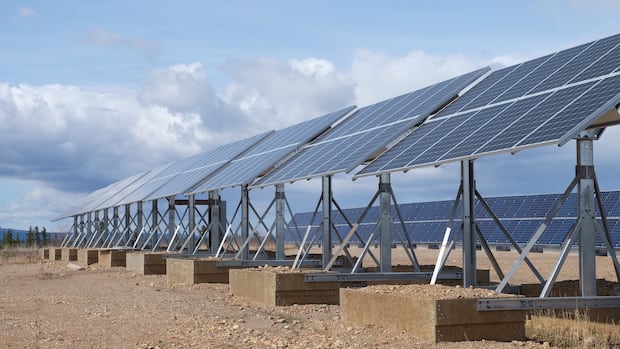
The government of the Northwest Territories is urging power companies to enhance their use of renewable energy. However, some specialists warn that there are constraints on what these companies can achieve at this moment due to financial considerations and outdated infrastructure.
Last year, the territory’s government instructed the Public Utilities Board to promote the development of renewable energy through several directives. Among these directives is an increase in the cap on the amount of renewable power that independent producers—like community energy initiatives or individual homeowners—are allowed to contribute to their local grids.
Currently, this cap is established at 20 percent of the average annual load demand for each community, and officials are seeking to raise it to 30 percent.
The government has noted that numerous communities have already hit the existing limit, and increasing it would facilitate more renewable energy projects throughout the territory.
In response, the two power companies in the N.W.T., Naka Power and the N.W.T. Power Corporation (NTPC), indicated last month in their submissions to the utilities board that they will aim to enable this increase, providing clear definitions and established limits. They also mentioned that surpassing 30 percent would necessitate additional mitigations.
The utilities explained that the rationale for maintaining a limit is that renewable energy can lead to less efficient and reliable operation of diesel generators due to the unpredictability of renewable energy sources. This variability can result in financial losses for the companies as they integrate more renewable energy into the system, which can also endanger their aging infrastructure.
Nonetheless, a 2021 engineering study commissioned by the territory assessed the maximum safe limit for renewable energy generation that the N.W.T.’s electricity systems could accommodate, suggesting a figure of 45 percent. The report stated that exceeding this would require extra infrastructure, including battery storage systems and microgrid controllers.
“These systems encounter difficulties when trying to communicate and integrate with advanced technologies for renewable energy generation,” explained Lynne Couves, a director for the Pembina Institute’s program on renewables in remote communities.
“The infrastructure in the North is quite old and needs modernization,” Couves added.
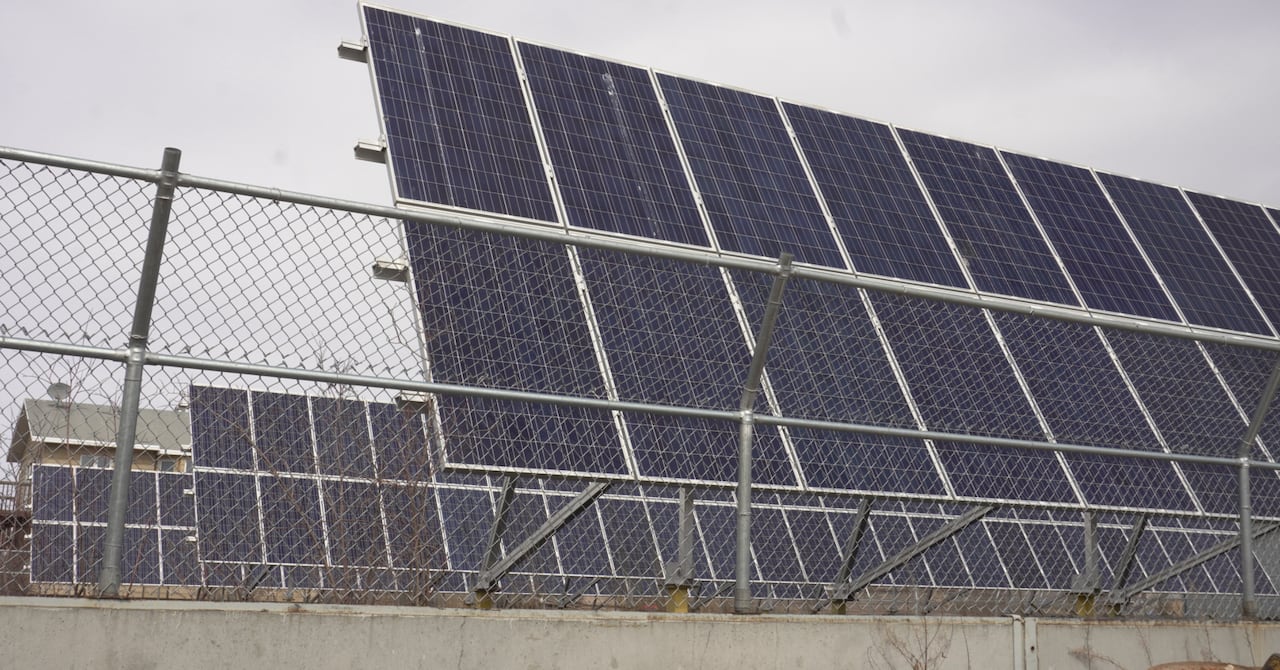
Solar panels in Łutselk’e, N.W.T., captured in May 2022. The territory’s two power companies indicate that renewable energy impacts the efficiency and reliability of diesel generators. (Natalie Pressman/CBC)
Couves remarked that renewable energy production, such as solar, is inherently variable. Its output fluctuates based on factors like weather, time of day, and season, leading to inconsistent electricity supply to the grid.
She noted that the imposed limits are “based on how comfortable the utilities feel managing the proportion of renewables.”
According to Couves, an effectively designed grid should start by assessing the required electricity and how that demand might evolve to determine the optimal mix of power generation.
“That could certainly include solar, especially considering the extended summer days,” she stated. “Wind energy could also be part of the mix.”
The community of Colville Lake integrated a hybrid energy system featuring a battery and solar array in 2016, with an investment of $8 million supported by federal funding. Similarly, the Town of Inuvik developed a solar and battery project backed by $5.5 million in federal support.
Financial Impact on Utilities
The financial implications for the utilities are also a concern.
A 2021 consultant’s report prepared for the territorial government revealed that while independent renewable energy generation can lower greenhouse gas emissions and help some customers save on their bills, it can also lead to losses for utility companies.
This occurs because when households or community projects generate their own electricity, the utilities sell less power. Even though there are savings on fossil fuel expenses, the utilities still incur fixed operational costs for infrastructure maintenance that do not decrease as more renewable energy is introduced to the grid.
-
Whitehorse grid-scale battery project won’t be ready by winter, utility says
-
Utilities board approves part of Inuvik Gas’s proposed rate hike, temporarily
The consultant’s evaluation estimated that utility companies faced a net revenue loss of about $493,000 in 2019 due to independent (non-utility) renewable generation. This figure could rise to between $1.8 million and $2.7 million within a decade if the current 20 percent capacity limits remain in place.
Battery Storage’s Role in Stabilization
Dennis Bevington, president of Stand Alone Energy Systems Ltd., an energy company based in Fort Smith, N.W.T., and an intervenor in the Public Utilities Board proceedings, advocates for reducing energy costs, enhancing reliability, and decarbonizing the system in the territory.
“I don’t necessarily advocate for every household to install solar panels. I believe we should see larger solar arrays in communities,” he commented.
Bevington emphasized that storage is crucial for supporting increased renewable energy in the territory.
“Introducing batteries into the system stabilizes everything,” he remarked. “Batteries are a fundamental component of any modern energy system, particularly in microgrids.”
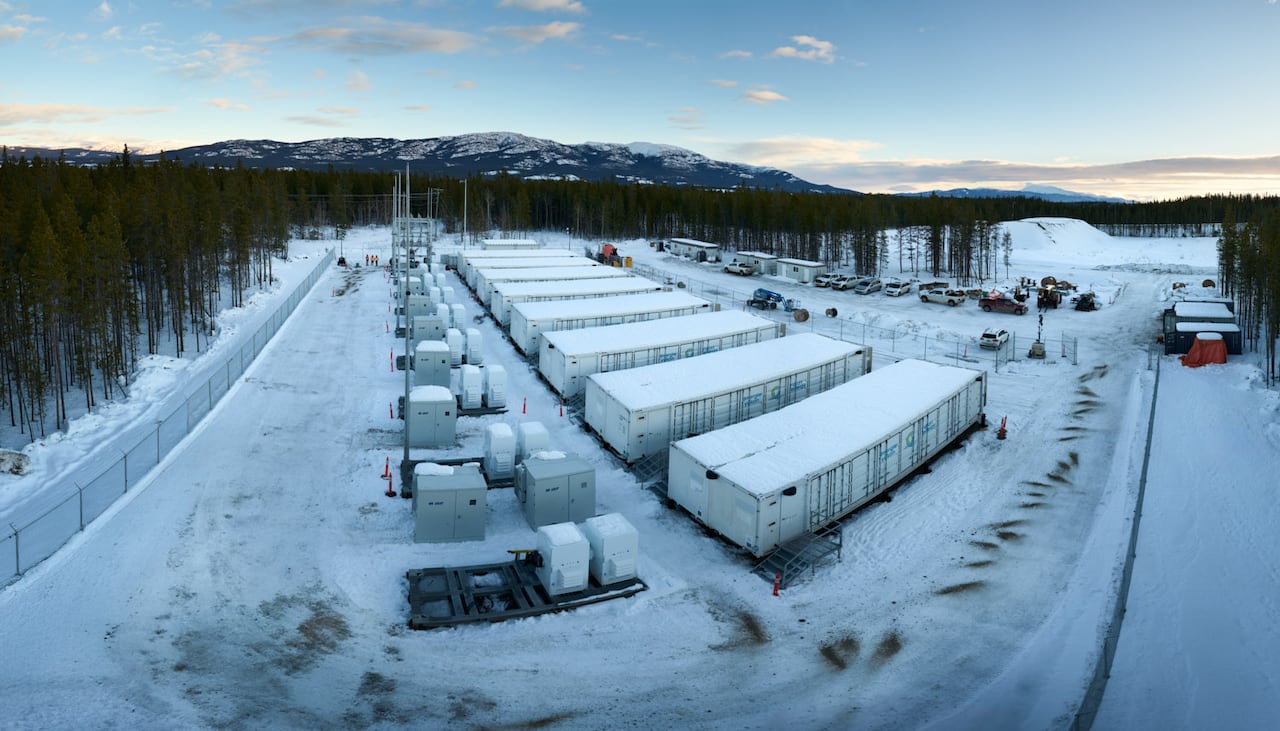
A grid-connected battery facility under development in Whitehorse. (Yukon Energy/Gary Bremner)
Couves concurs that batteries play a significant role in modernizing the northern grids, but she cautioned that it’s not an easy solution.
“Batteries are beneficial since they can mitigate the fluctuations that the grid experiences,” she stated. “However, batteries come at a cost.”
Bevington pointed out that the expenses associated with new technology should be weighed against the current costs associated with existing electricity systems.
“Everything in our systems is costly. But what’s the return?” he asked. “If an investment requires a certain amount upfront but can lead to significant savings over time, then it’s not expensive—it’s essential.”
The proceedings at the Public Utilities Board are anticipated to continue until 2027. Registered stakeholders and intervenors will have the chance to provide their feedback on the proposed changes next March, with a public hearing set for June.