
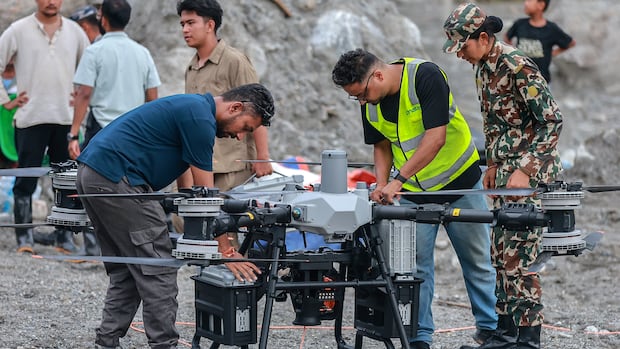
In the aftermath of last month’s catastrophic floods, with roads and bridges damaged and helicopters engaged in search and rescue missions, Nepal’s military is resorting to drones to provide assistance to those displaced.
As a result of a glacier breaking off in the Himalayas near the Nepal-China border in late August, at least 1,367 individuals have been confirmed dead, and over 5,000 are still unaccounted for, leading to widespread destruction along downstream rivers.
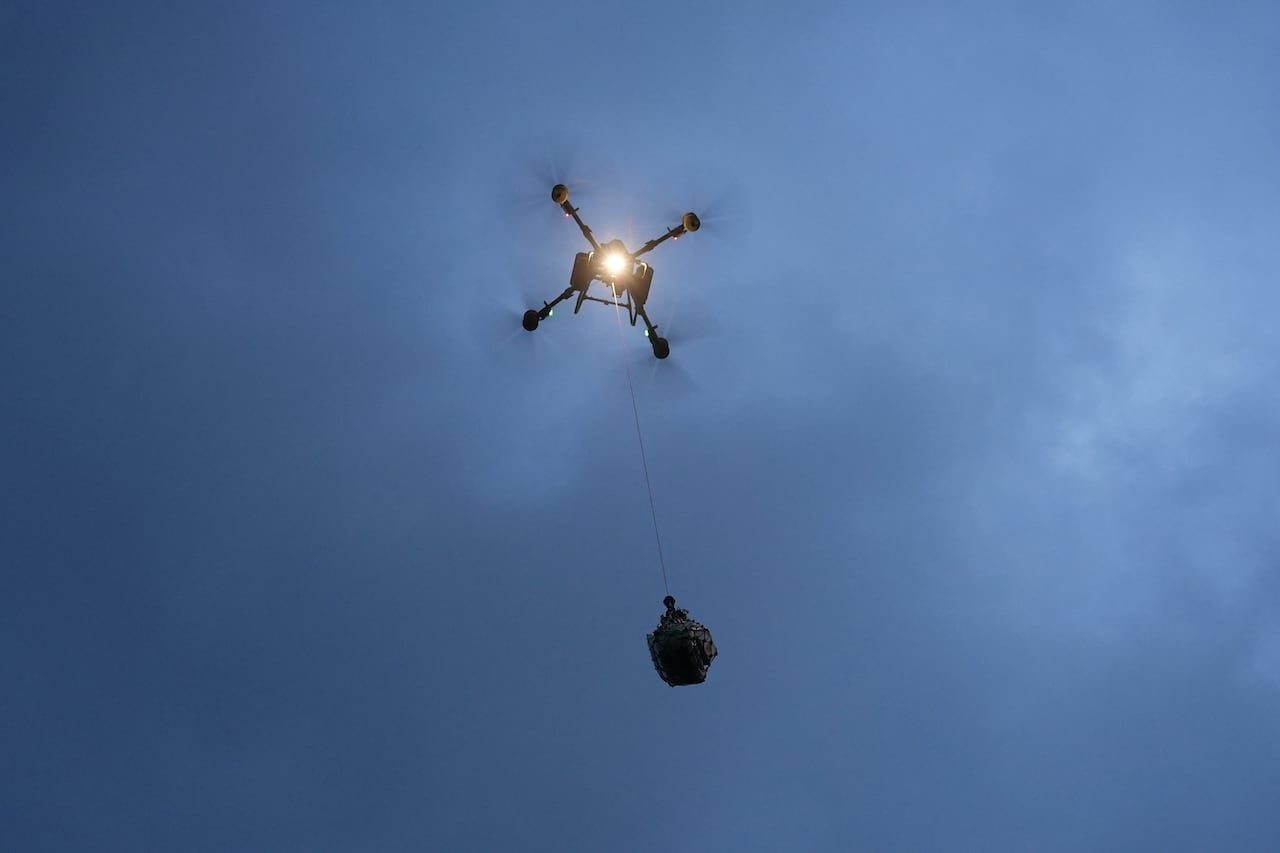
A DJI FlyCart 100 drone delivering relief supplies during an aid operation for residents affected by severe flash floods and landslides in Devighat, Nepal, on Sept. 8. (Joseph Campbell/Reuters)
“Most of our helicopters are occupied with rescue missions. The only viable method to transport food, essentials, medicine, and fuel is through drones, which are the optimal solution, and we need to give them higher priority,” stated Santosh Budhathoki, a drone pilot contracted by the Nepal army.
Drones can cover distances of three to four kilometers and carry loads of up to 60 kilograms at once. According to Budhathoki, they have already begun to make a significant difference for communities in desperate need of assistance.
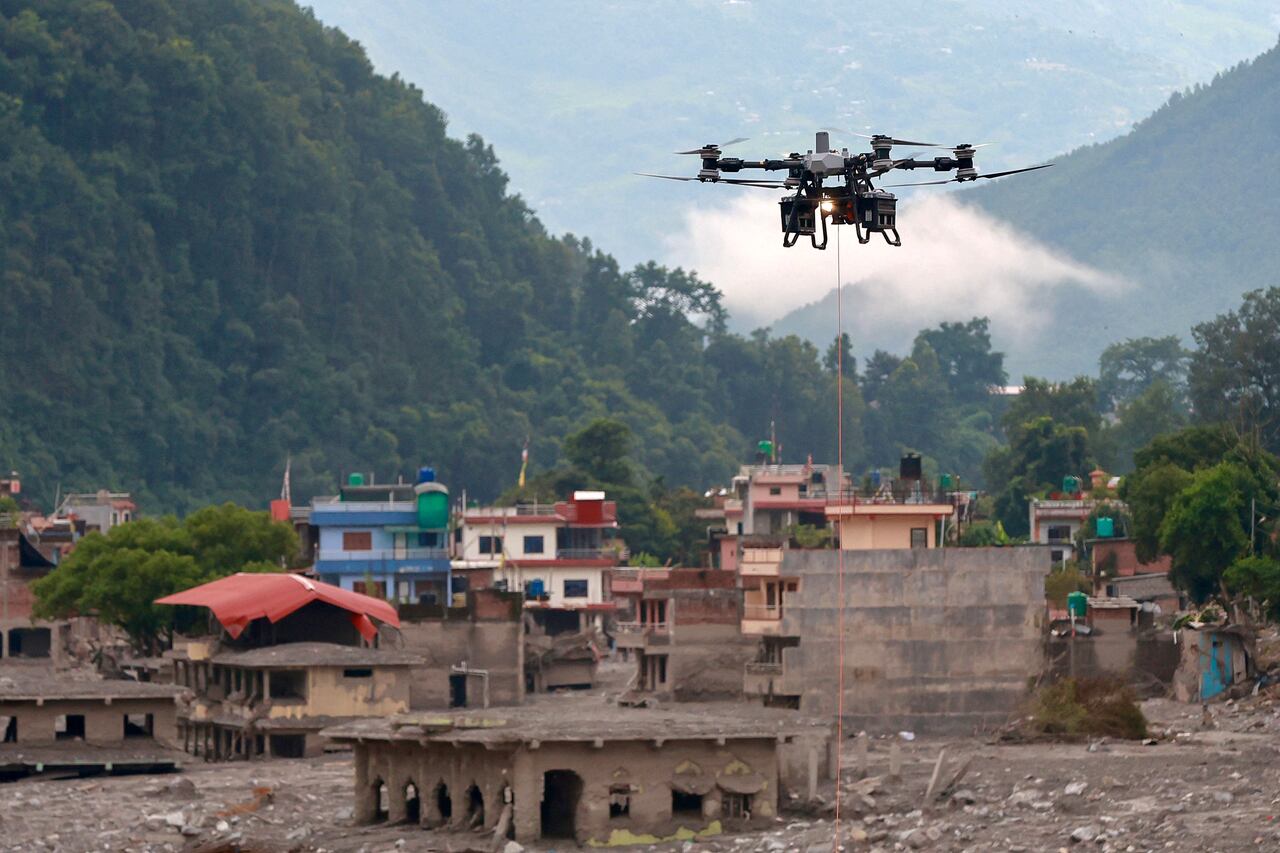
A drone transporting relief materials to a flood-affected zone is captured in Trishuli, Nepal, on Sept. 4. (Prabin Ranabhat/AFP/Getty Images)
Currently, the army conducts approximately 10 to 16 aid deliveries daily using a fleet of four DJI FlyCart 100 drones, all provided as part of a recent aid initiative from China.
Beyond delivering aid, drones have also been utilized to transport the remains of flood victims in certain areas, while reconnaissance drones are actively employed in search and rescue efforts.
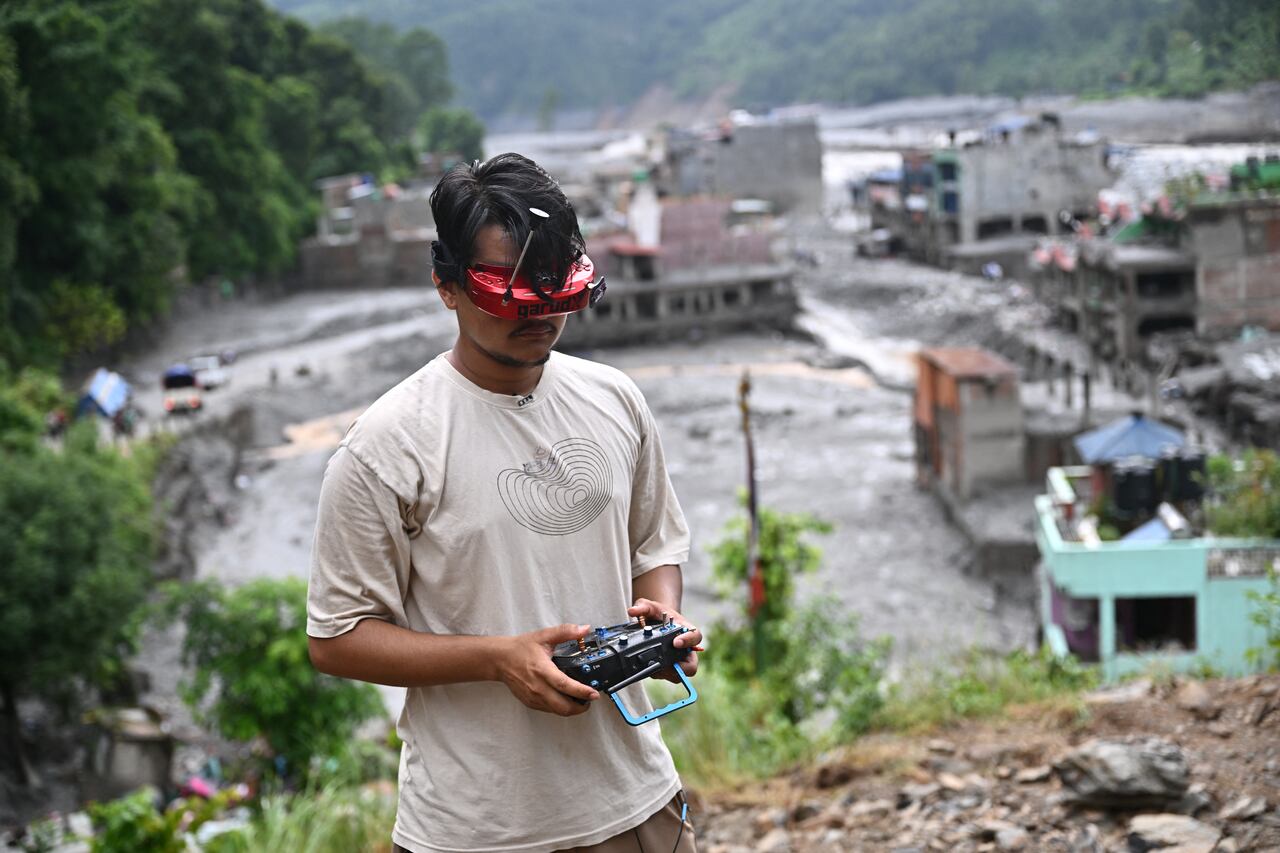
A drone operator demonstrates his equipment during an interview in Trishuli, Nepal, on Sept. 7. (Pedro Pardo/AFP/Getty Images)
“We’ve been making trips back and forth since early morning. It’s indeed quite hectic, as we need to deliver aid immediately,” remarked Milan Pandey from the drone-operating firm Airlift Technology.
“Given Nepal’s geography and terrain, drones can operate much faster, more efficiently, and at a lower cost,” added Pandey.
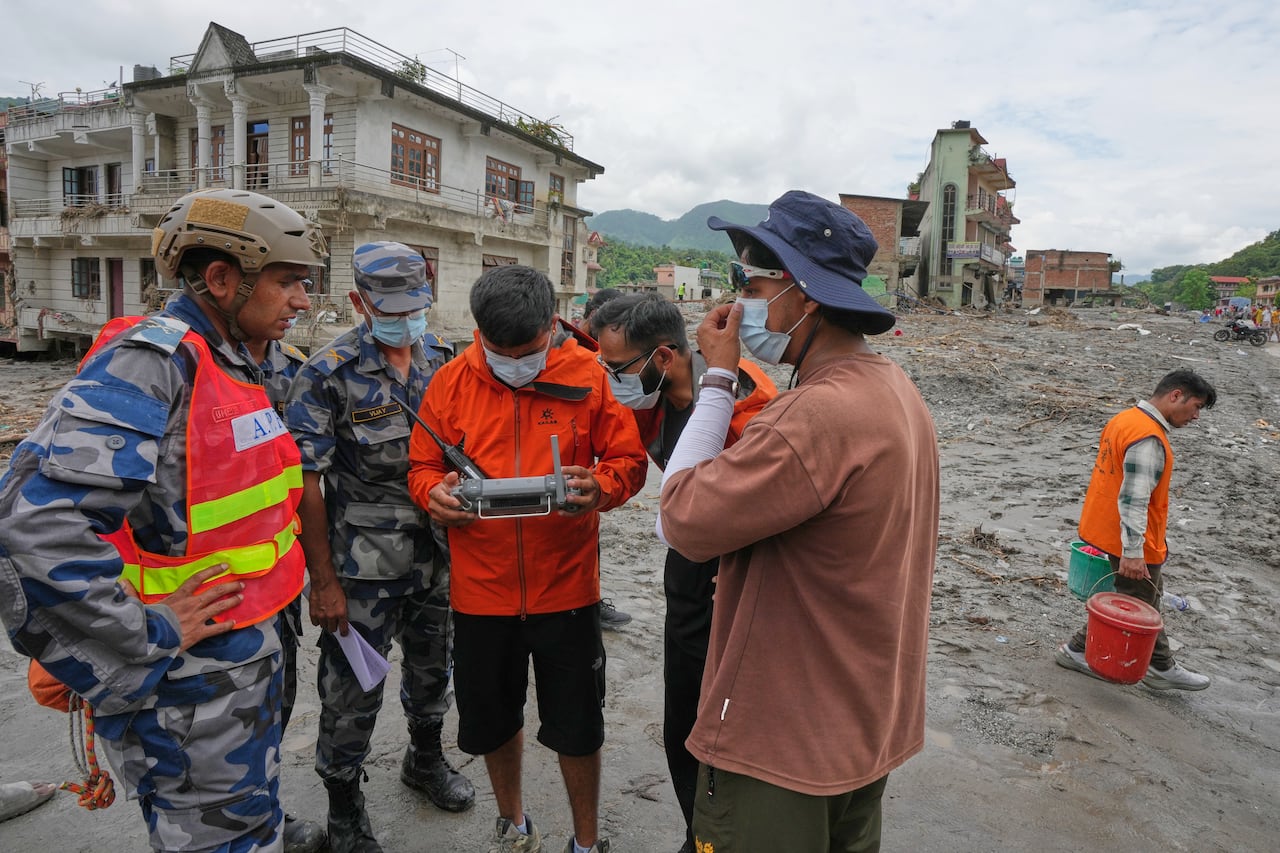
Rescuers and police utilize a drone to evaluate the situation on the ground following flash floods in Devighat, Nepal, on Aug. 29. (Rajesh Kumar Singh/The Associated Press)