
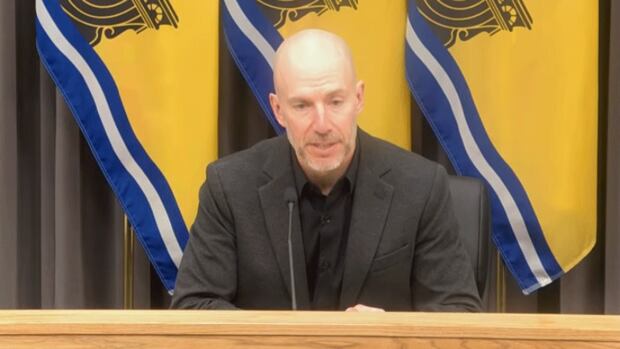
An investigation by the province into the so-called mystery brain illness has determined that environmental factors such as herbicides and heavy metals are unlikely to be responsible for the neurological symptoms experienced by hundreds of residents in New Brunswick.
On Friday, Dr. Yves Léger, the chief medical officer of health, unveiled the final report concerning 222 cases of “undiagnosed neurological illness.”
The inquiry began last March in response to concerns raised by Moncton neurologist Dr. Alier Marrero in 2023 about elevated levels of herbicides like glyphosate and glufosinate, along with various metals such as aluminum, arsenic, lead, and mercury in some patients.
Léger stated at a news conference in Fredericton, “The primary findings do not indicate that exposure to specific environmental substances was a likely cause of illness in all or even the majority of the patients examined.”
When asked for further details, Léger explained that the conclusions are derived from the overall group of patients and do not suggest any “widespread … exposures” contributing to the illnesses of most patients.
He clarified to CBC News, “We cannot comment on individual patients because we did not review individual patient files; we focused on individual [test] results.”
The report does not pinpoint what is causing the symptoms, which include painful muscle contractions, hallucinations, memory issues, and changes in behavior — a phenomenon that has generated international media attention and controversy over the years.
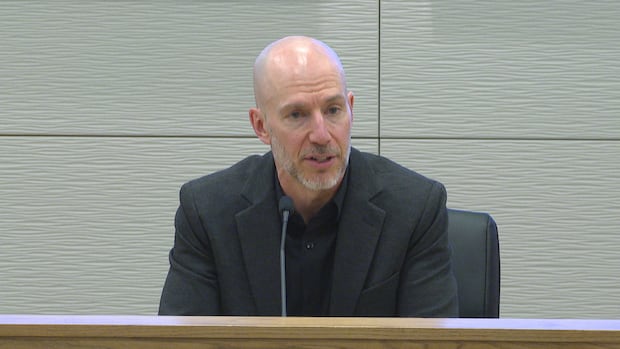
The chief medical officer of health in New Brunswick indicates that all evidence points to known causes for several cases previously suspected to be a new or unidentified disease.
However, Léger remarked that the recent findings, in conjunction with a 2022 report from the former government concerning an initial cohort of 48 patients, mainly from the Acadian Peninsula and Moncton area, along with a scientific study published last May in the Journal of the American Medical Association, indicate that patients are likely experiencing an illness that can be diagnosed.
The nine autopsies examined revealed known conditions such as Alzheimer’s disease, Lewy body dementia, and Creutzfeldt-Jakob disease (CJD), he noted.
Léger stated, “When we began this work, we understood that it would not answer all the questions that patients were seeking. We realized this would not conclude the efforts needed on this issue.”
Patient feedback varied
Sarah Nesbitt, 42, from Canaan Station, situated just north of Moncton, is one of Marrero’s patients and acts as a co-liaison between the patients and the government. She characterized the report as “double-edged.”
Many patients are feeling “disheartened,” she said, as they still lack answers regarding the cause of their ailments, how to achieve recovery, or how to prevent further cases.
“They perceive this as similar to the initial [report in 2022], but at least this time, they did discover ‘some patients who had elevated levels of herbicides and heavy metals,'” she added.
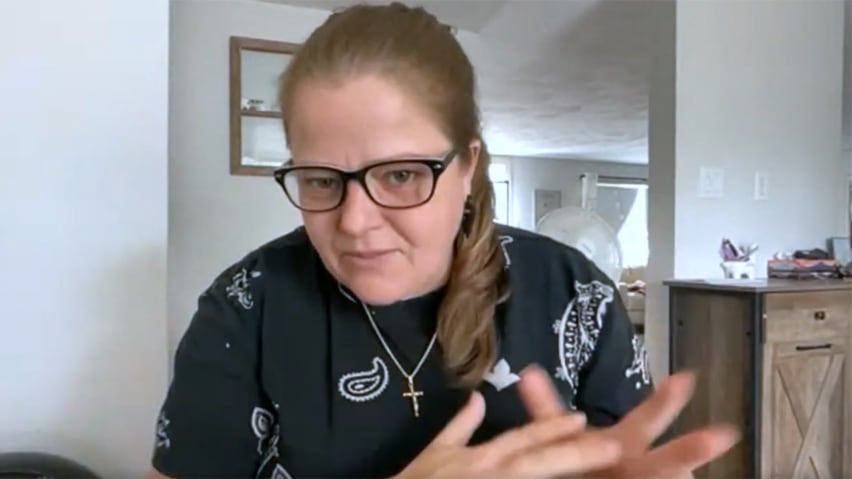
Patient co-liaison Sarah Nesbitt expressed that patients continue to support Marrero. (Google Meet/CBC)
According to Léger, the data gathered by Marrero had “significant limitations.”
For instance, the optimal type of specimen for testing specific substances was not consistently utilized, and only “very few” patients with high test results were retested to confirm the findings.
Despite this, the province found that approximately 95 percent of herbicide test results fell “within the normal or expected range” when compared to the labs’ reference ranges and mirrored levels seen in other Atlantic Canadians.
Regarding heavy metals, around 93 percent of results were also within normal or expected levels when compared to reference ranges, with most being comparable to or lower than a sample of Canadians, although a few elevations were noted for certain metals.
N.B. delays report on mystery brain illness, sends all data for federal review
Patients ask Holt to intervene in N.B.’s mystery brain illness investigation
Nesbitt raised concerns about the absence of follow-up testing. She has experienced illness since 2020, during which time she lived in Steeves Mountain, roughly 20 kilometers east of Moncton, and she mentioned that Marrero tests her every six months.
“I undergo about 23 to 24 vials of blood every time, along with a 24-hour urine test,” she stated.
Nonetheless, patients are encouraged by the fact that the province is “not going to abandon” them, she remarked. “There is still work to be done.”
Three recommendations
The report outlines three recommendations that provide a “path forward,” according to Léger.
One recommendation involves establishing a process to aid patients in obtaining a second, independent assessment and diagnosis of their condition, ensuring they receive the necessary care and follow-up.
Testing for herbicides or metals should be performed “only when there is a clear rationale, such as the presence of symptoms or identified exposure,” the report advises. The appropriate type of sample must be utilized to ensure more accurate and reliable results, and any tests indicating high levels should be repeated at least once.
Additionally, the report suggests implementing a formal procedure requiring two specialists to review and consent to a report of undiagnosed neurological illness in a patient.
Léger expressed his desire to see all three recommendations enacted “as soon as possible.”
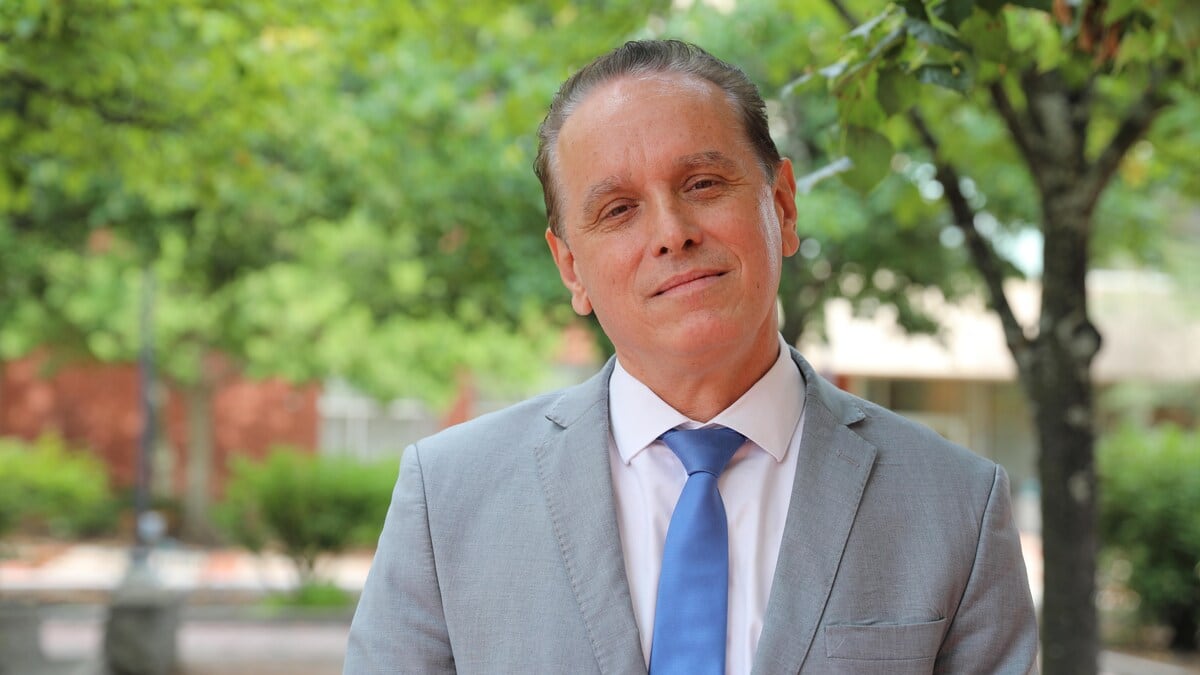
Dr. Alier Marrero, a neurologist from Moncton, has indicated that approximately 500 patients across seven provinces are experiencing unexplained neurological symptoms, which include painful muscle spasms, hallucinations, memory loss, and behavioral changes. (CBC)
The provincial government has also requested the Public Health Agency of Canada (PHAC) to review the raw data of individual patients “to identify any trends or issues of concern,” Léger stated.
A timeline for the agency’s work will be established once the informed patient consent process is complete, the data-sharing agreement is finalized, and the data has been shared, he added.
A PHAC spokesperson, who chose to remain unnamed, declined to comment, directing all inquiries back to the province.
Nesbitt expressed her hope that they reach out to patients and “delve deeper instead of merely sitting behind desks reviewing paperwork.”
N.B. completes data analysis phase of mystery brain illness investigation
Analysis of ‘undiagnosed neurological illness’ underway, too soon to talk possible source, says doctor
Stacie Quigley-Cormier, a patient co-liaison from Dalhousie Junction, whose stepdaughter Gabrielle, 24, is one of the youngest patients experiencing symptoms, also hopes that the PHAC review will “provide a more accurate understanding of the reasons behind patient clusters, atypical manifestations of illness, and investigate environmental issues.
“The reality for patients is that there are geographical clusters, common test results, and a significant number of patients who have undergone repeat tests,” she stated in an email.
Regulatory authority to determine subsequent actions
Léger directed inquiries regarding Marrero’s qualifications and any potential disciplinary measures to the College of Physicians and Surgeons and the Vitalité Health Network.
The province does not plan to file a complaint against him, he noted, emphasizing that neurology is a complex field where a diagnosis may take months or even years.
Nevertheless, there is “an accumulating body of … solid evidence” indicating that patients may have conditions that can indeed be diagnosed, which he described as “very concerning” due to the suffering involved and the lack of proper treatment plans.
In an unsigned emailed statement, the provincial regulatory body acknowledged the difficulties faced by the many affected patients.
“We will carefully examine the report and its recommendations to determine if any further actions are necessitated by the College,” it stated.
Vitalité also mentioned it will “take the necessary time to thoroughly review the report before deciding on the next steps.”
Patients will be kept updated, it assured.
Nesbitt reiterated that patients continue to support Marrero.
“I would like people to focus on the patients, rather than shaming or attacking a doctor who has strived to assist us and has fulfilled his responsibilities to his patients,” she remarked.
Marrero did not respond to a request for comment.