
In eastern Newfoundland, a cidery is experimenting with enhancing the flavors of its beverages by submerging them underwater. The Newfoundland Cider Company, based in George’s Brook-Milton, initiated this unique process in 2024 by placing 24 bottles into the Atlantic Ocean. This underwater aging technique, named High Tide, involves leaving the bottles submerged for a specific period, allowing them to interact with the ocean environment.
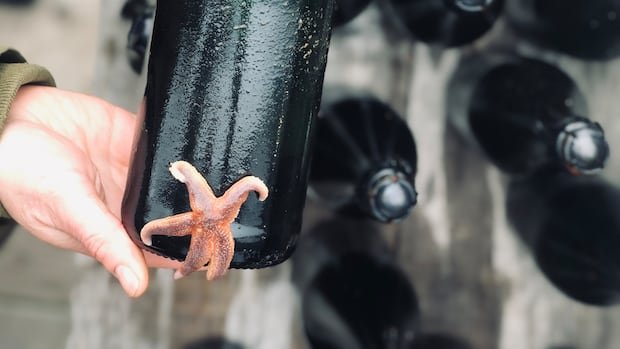
Founder Chris Adams described the concept as a fusion of land and sea, where the cider absorbs the essence of the ocean while maintaining its orchard essence. Upon retrieval, the bottles are encrusted with salt, sand, barnacles, algae, and sometimes even sea creatures like starfish, adding a distinctive touch to the experience.
Adams emphasized the importance of preserving marine life during the process, ensuring that the ecosystem remains unharmed. The cidery deliberately leaves the algae and barnacles on the bottles, considering them integral to the unique tasting experience of High Tide.
The decision to explore underwater aging was inspired by the use of wild apples and yeast in their cider production. Drawing from the practice of wineries aging wine at sea, Adams saw an opportunity to infuse their cider with the essence of the ocean. The result is a cider with a hint of sea aroma that sets it apart from traditional varieties.
Despite the challenges involved in submerging the cider and dealing with unpredictable weather conditions, Adams remains committed to refining the process. Learning from setbacks, such as bottles being damaged due to storms, the company plans to select calmer sea locations and secure the crates more effectively in future attempts.
Ocean aging offers a controlled environment with stable temperatures, akin to traditional cellar aging, which can enhance the quality of the beverage. Jean-Benoit Deslauriers, a wine expert from Benjamin Bridge in Nova Scotia, noted the advantages of underwater aging, such as consistent temperatures and protection from harmful ultraviolet light, which can degrade the quality of alcoholic drinks.
While the exact impact of underwater aging on beverages remains somewhat mysterious, the Newfoundland Cider Company continues to explore this unique method, driven by the success of their initial experiment. Despite setbacks, Adams remains optimistic about the future of High Tide cider, aiming to perfect the process for a truly distinctive tasting experience.