
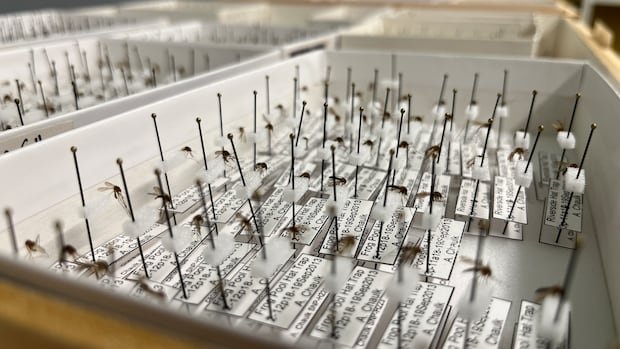
In Newfoundland and Labrador, researchers and a public health official emphasize the importance of monitoring mosquito- and tick-borne diseases as potential future concerns. A recent study by Memorial University aimed to identify mosquito species and the viruses they carry in the region, driven by the impact of global warming on local insect populations.
Lead scientist Atanu Sarkar, a public health specialist at Memorial University, highlighted the role of climate change in facilitating the spread of mosquitoes and infectious diseases. Through a citizen science project involving 182 residents and spanning two years, researchers collected over 3,500 mosquito samples, uncovering invasive species thriving in the Newfoundland climate and identifying various viruses, including those transmittable to humans like Snowshoe hare and Jamestown Canyon virus.
This study marked the first mapping of mosquito and virus distribution in the province, a significant milestone according to fellow researcher Tom Chapman, a biology professor at Memorial University. The presence of these viruses is not entirely new, as previous recordings from the 1980s had noted their existence.
Amid changing weather patterns and increased international travel facilitating the introduction of non-native species, the researchers stress the need for further investigations to pinpoint high-risk areas for better public health recommendations. While Lyme disease remains a concern due to ticks in the region, experts like Hugh Whitney, the former chief veterinary officer of Newfoundland and Labrador, suggest that permanent tick populations are unlikely to establish locally due to specific host animal requirements not native to the province.
With ongoing monitoring efforts by public health officials, including Dr. Janice Fitzgerald, the risk of mosquito-borne illnesses currently outweighs that of tick-related diseases in the province. While cases of mosquito-borne viruses are reportable and few have been recorded so far, preventative measures like insect repellent use and habitat elimination are crucial for protection, as no vaccines are presently available. The emphasis remains on public awareness and proactive measures to mitigate disease transmission risks effectively.