
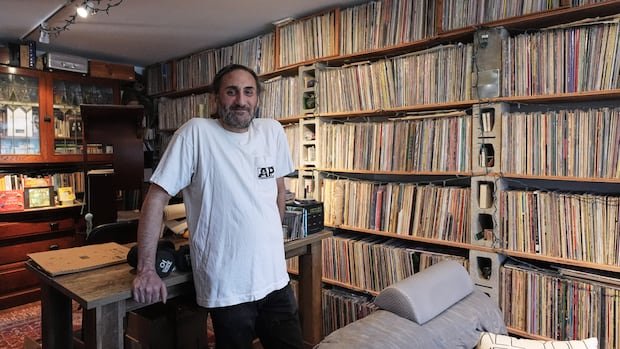
On July 8, 1989, a young music enthusiast named Aadam Jacobs attended the debut performance of an emerging rock band from Washington in Chicago, equipped with a small Sony cassette recorder. Following a burst of guitar feedback, Kurt Cobain, a 22-year-old, cordially introduced the band as Nirvana from Seattle before they launched into their first song, “School.” Jacobs covertly captured the show, capturing Nirvana in their early, energetic stage over two years before their breakthrough with the album “Nevermind.”
Over the next four decades, Jacobs recorded over 10,000 concerts using increasingly advanced equipment in Chicago and other cities. Today, a dedicated team of volunteers in the U.S. and Europe is meticulously organizing, digitizing, and uploading these recordings one by one, forming the expanding Aadam Jacobs Collection. This collection is a valuable online resource for music enthusiasts, particularly those fond of indie and punk rock from the 1980s to the early 2000s, a period when the genre flourished and gained popularity.
Included in the collection are early performances by iconic artists such as R.E.M., The Cure, The Pixies, The Replacements, Depeche Mode, Stereolab, Sonic Youth, and Björk. Additionally, there are recordings of hip-hop acts like Boogie Down Productions and a previously unreleased 1990 performance by Phish. The archive also contains sets by lesser-known artists catering to diverse musical tastes.
All these recordings are gradually being made accessible for streaming and free download on the non-profit online platform Internet Archive, including the cleaned-up audio from Jacobs’s original cassette recording of the Nirvana show.
Before his recording of the Nirvana gig in 1989, Jacobs had been capturing concerts for five years. Starting as a teenager recording songs from the radio, he ventured into taping live shows after being encouraged by someone he met. Despite initially using basic recording devices due to financial constraints, Jacobs eventually upgraded to digital formats as technology evolved.
Describing himself as a music enthusiast rather than an archivist, Jacobs saw documenting concerts as a way to combine his love for music with his frequent attendance at live events. Despite initial pushback from venue owners, he gained acceptance within the music scene, with many venues allowing him free entry once they recognized his presence.
Renowned author Bob Mehr, who profiled Jacobs in 2004, lauds him as a cultural figure in Chicago, noting his genuine passion for music and its preservation. Following a documentary about Jacobs in 2023, volunteers from Internet Archive approached him to safeguard his collection, leading to its ongoing preservation efforts.
Monthly, volunteer Brian Emerick visits Jacobs to collect boxes filled with tapes, each containing numerous recordings. Emerick’s role involves converting analog recordings to digital files for further processing by volunteer engineers across the U.S., U.K., and Germany. Despite encountering broken equipment, Emerick has managed to digitize thousands of tapes, with several years estimated to complete the project.
Volunteer-engineers like Neil deMause are impressed by the audio quality of Jacobs’s original recordings despite the primitive equipment used. Identifying song titles can be challenging, requiring extensive research and collaboration among volunteers to ensure accuracy. Jacobs respects artists’ copyright concerns and willingly removes recordings upon request, with minimal instances of takedown requests so far.
While legal ownership of the live recordings lies with the artists under anti-bootlegging laws, Jacobs’s non-profit initiative has not faced legal challenges due to its non-commercial nature. Bands like The Replacements have even integrated Jacobs’s recordings into official releases, recognizing the historical significance of his work.
Although Jacobs has ceased recording concerts due to health issues, he continues to appreciate live music shared online by a new generation of fans, noting the widespread availability of concert recordings through modern technology.