
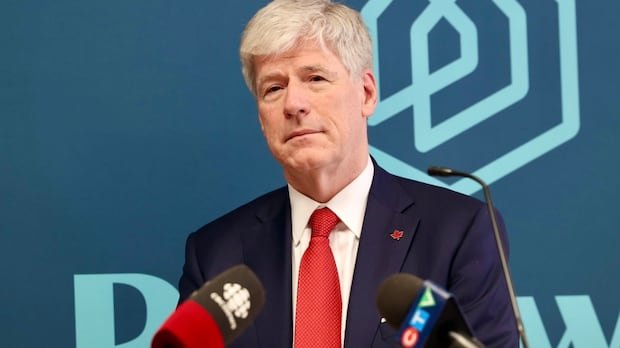
The Nova Scotia Premier, Tim Houston, is pushing forward with his ambitious offshore wind energy initiative, seeking support from the federal government. However, Ottawa is awaiting commitments from private sector partners before designating it as a project of national interest.
Federal Energy and Natural Resources Minister, Tim Hodgson, emphasized that the Major Projects Office requires assurance of industry readiness to advance the initiative from a strategic plan to an individual project.
Dubbed as Wind West, Houston’s vision entails a significant expansion of offshore wind projects and the establishment of a transmission line to facilitate energy exports. The estimated cost of the project is $40 billion for five gigawatts of turbines and $20 billion for transmission cables.
While Prime Minister Mark Carney has hinted at the potential inclusion of Wind West in the major projects list, further development and partnership commitments are needed for approval.
The partnership dynamics for the project highlight a sequential challenge, with various stakeholders awaiting each other’s participation. The Canada-Nova Scotia Offshore Energy Regulator initiated a process last year to pre-qualify potential developers, with a call for bids expected later this year.
French company Q Energy has expressed interest in building in Nova Scotia waters, contingent upon the progress of transmission infrastructure. Houston remains optimistic about private sector interest, citing a strong attraction due to the region’s exceptional wind resources.
The regulator reported a substantial response to the pre-qualification call, affirming the project’s momentum. Additionally, a feasibility study for Wind West received funding support from Natural Resources Canada and the province, marking a significant milestone in project development.
Houston’s legislative proposal aims to establish revenue mechanisms from offshore wind projects, proposing a four percent royalty on gross revenue after ten years of operation to incentivize developer engagement without imposing high initial fees.