
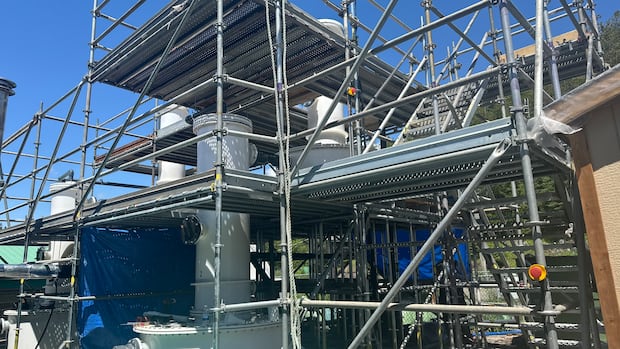
A startup based in Nova Scotia is exploring a technique to enhance carbon capture and storage in the ocean, utilizing a new pilot facility to validate their approach.
The ocean serves as a significant reservoir for excess carbon dioxide, having absorbed approximately 30 percent of all anthropogenic carbon emissions since the 1980s.
The company pHathom seeks to extract additional emissions from the atmosphere by capturing carbon dioxide and transforming it into a stable form that can be securely stored in the ocean for thousands of years.
This method will be tested at the Huntsman Marine Science Centre, a non-profit research and educational institution located in St. Andrews, N.B.
Kimberly Gilbert, co-founder and CEO, stated that this pilot project represents the initial phase of demonstrating that the method is both safe and effective.
“Climate change is a worldwide issue, [but] introducing something into a local ocean is a local concern … therefore, the local solution must be proven safe,” Gilbert explained.
The approach employed by the company mimics a natural process. Rainfall captures carbon dioxide from the atmosphere, resulting in slightly acidic droplets.
When these droplets land on alkaline rocks such as limestone, a small amount of the rock dissolves, lowering the acidity of the water and converting the carbon dioxide into bicarbonate.
Eventually, these droplets flow into the ocean, where the bicarbonate can be stored for tens of thousands of years, thus preventing carbon dioxide from re-entering the atmosphere.
“We replicate that process, but within a reactor,” said Gilbert.
The technique involves drawing in seawater and exposing it to the emissions from a biomass power plant, which increases the water’s acidity. This acidic water is combined in a tank with fine limestone particles, converting the carbon dioxide into bicarbonate before it is returned to the ocean at the same pH level as standard seawater.
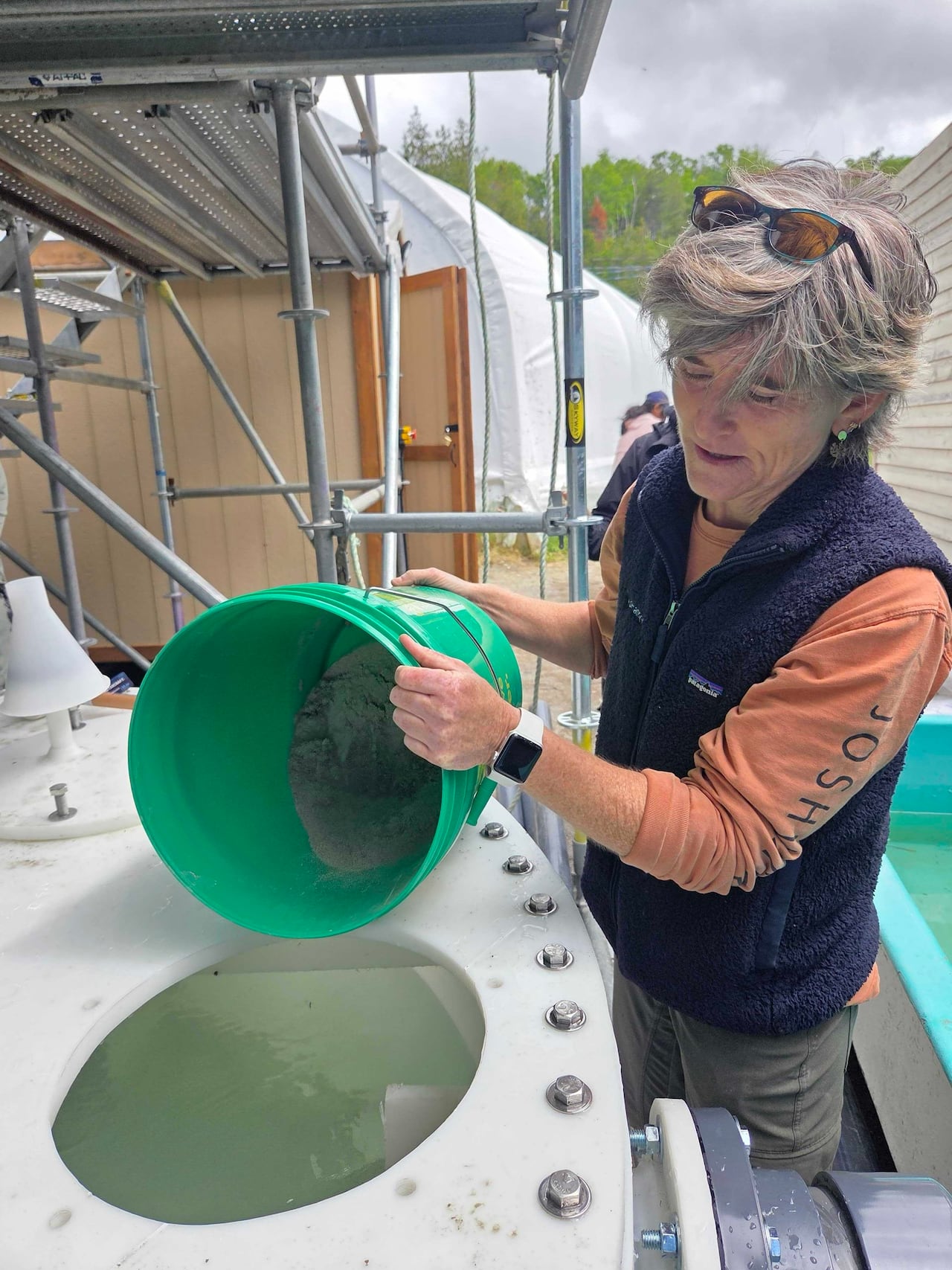
Kimberly Gilbert serves as the CEO of pHathom. She emphasized that the company’s priority is to ensure safety first, then to create positive outcomes. (CBC)
Other startups in Nova Scotia are exploring various adaptations of this carbon removal strategy, referred to as alkalinity enhancement.
One of these companies, Planetary , is conducting a project at Tufts Cove in Halifax, where they are adding alkaline rock to seawater to elevate its pH and enhance carbon dioxide absorption. Another firm, CarbonRun, is implementing a similar technique on rivers throughout Nova Scotia.
Gilbert highlighted that pHathom’s approach benefits from utilizing highly concentrated carbon dioxide, which enhances the efficiency of the process. Since the reaction occurs within a contained reactor, the environmental impacts can be directly monitored.
The pilot project aims to capture 0.1 tonnes of carbon dioxide daily. For context, the Belledune coal-fired power plant in northern New Brunswick emits around one million tonnes of carbon annually. The process also generates treated water for testing tanks, where researchers will observe the impacts on various marine life over a three-month period.
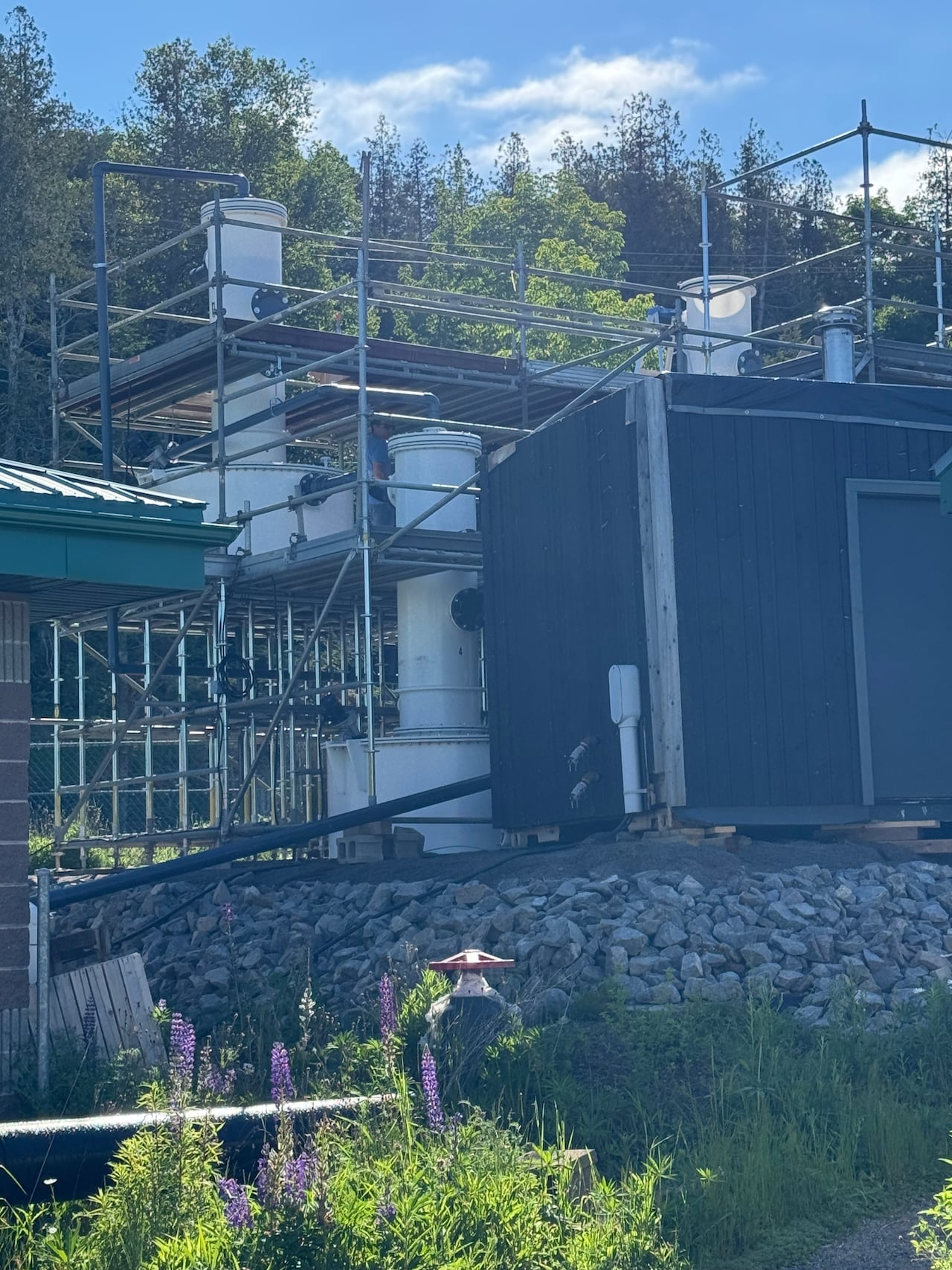
Experiments will take place at the Huntsman Marine Science Centre. (CBC)
Davide Asnicar, an associate research scientist at the Huntsman Marine Science Centre, remarked that since pHathom’s method is innovative, many uncertainties remain.
“It’s incredibly exciting to be at the forefront of this scientific field because it offers numerous opportunities to determine the safety thresholds,” he stated.
If the pilot proves successful, pHathom intends to expand with a second testing site in Nova Scotia next year, integrating their reactor into an institutional building transitioning from a fossil-fuel boiler to a biomass system.
A significant challenge for any carbon removal technology is scaling up. According to modeling by the Intergovernmental Panel on Climate Change (IPCC), to limit global warming to 1.5 degrees Celsius, carbon dioxide removal must reach between 10 to 20 gigatonnes annually (with one gigatonne equal to one billion tonnes).
Katja Fennel, a professor of oceanography at Dalhousie University and leader of the Ocean Alk-Align research consortium, cautions that there are substantial geochemical and regulatory obstacles ahead.
“For [ocean alkalinity enhancement] to be regarded seriously as a climate mitigation strategy, we need to ensure that it can be scaled to one gigatonne of carbon dioxide removal each year,” Fennel noted. “This is a formidable challenge, and it remains uncertain whether this can be achieved.”
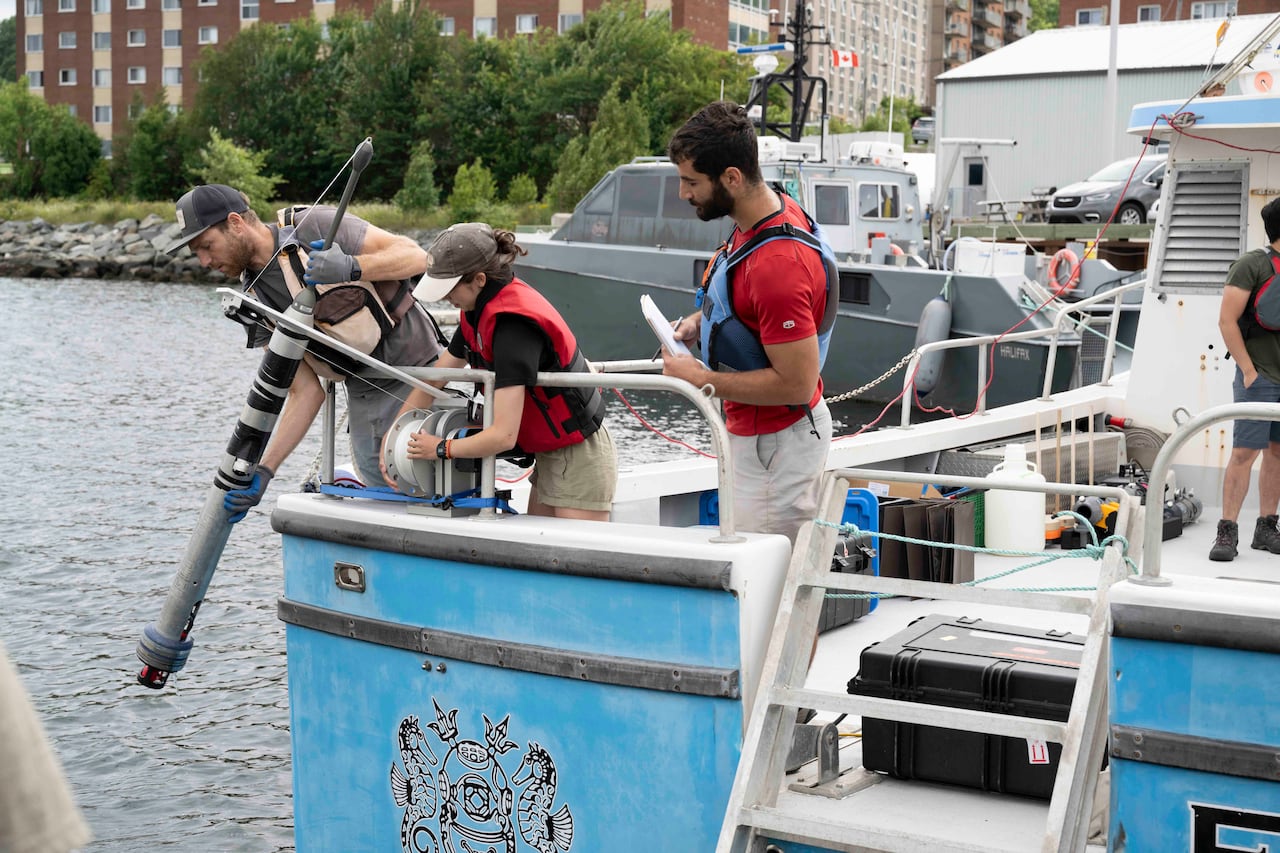
Researchers are deploying tracking devices in Halifax harbour to monitor water movement. (Dalhousie University)
Energy requirements also pose a significant challenge, as these extraction and processing techniques demand considerable power to function.
Nonetheless, Fennel asserts that the urgency of the climate crisis warrants the exploration of all viable removal technologies—provided that efforts to shift away from fossil fuels persist.
“We must reduce emissions; there is no doubt about that.”
A recent report from the Canadian Senate has recognized Canada as a frontrunner in ocean alkalinity enhancement research, urging the federal government to lead the charge in developing international implementation and regulatory frameworks.
However, domestic climate policies are encountering economic challenges. Recent changes to the industrial carbon pricing by the federal government have created uncertainty in the market, jeopardizing the financial feasibility of several carbon capture and storage initiatives across Canada.
In spite of these policy fluctuations, Gilbert remains hopeful that both economic and environmental realities will compel global action. When that shift occurs, she aims for the technology to be validated and ready.
“When we start to pay attention again and are prepared to take action, we’ll be ready.”
MORE TOP STORIES
-
Exclusive
N.S. families thought they buried their loved ones. Officials are now investigating
-
Legal aid lawyer calls for changes to N.S. government public safety omnibus bill
-
RCMP say Timberlea arsons believed to be targeted
-
Windsor hobby farmer beefing up security after chickens stolen
-
Video
Premier touts N.S. projects at investment summit
Tag: rewrite-pending