
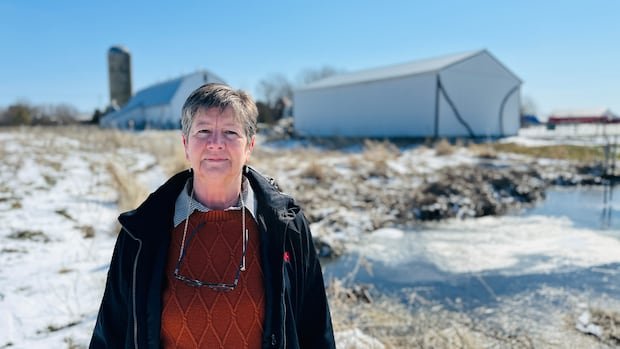
An eastern Ontario farmer is optimistic that the conservation area she established on her property will contribute to Canada’s nature protection goals. Jackie Kelly-Pemberton, operating a small beef farm near Winchester, has created a wetland to manage manure runoff from the cattle present year-round. The wetland, featuring sedges, bulrushes, cattails, and ponds, acts as a natural filtration system for barnyard runoff before it reaches the South Nation River and eventually the Ottawa River.
Kelly-Pemberton emphasized the importance of water quality, acknowledging that water transcends boundaries and cannot be contained by fences. The project, supported by ALUS (formerly known as Alternative Land Use Services), provided the necessary expertise and funding for implementation. ALUS President Jordan Sinclair highlighted the potential of nature-based farm projects like Kelly-Pemberton’s in contributing 65,000 hectares towards the national nature protection targets set by the federal government.
In alignment with Prime Minister Mark Carney’s recent nature strategy unveiling, aiming to safeguard 30 percent of lands and oceans by 2030 (referred to as “30 by 30”), these initiatives are crucial to doubling the current protected areas. The strategy involves soliciting private funding from businesses and investors for conservation efforts and recognizing “other effective area-based conservation measures” (OECMs), such as those protected by local communities and private entities.
Carney emphasized the need for substantial funding to realize the ambitious creation of these conservation spaces, stating that public funds alone are insufficient. To qualify as an OECM, areas like Kelly-Pemberton’s project must have clear boundaries, authorities to regulate activities within them, and restrictions on activities conflicting with conservation objectives, as outlined by Environment and Climate Change Canada.