
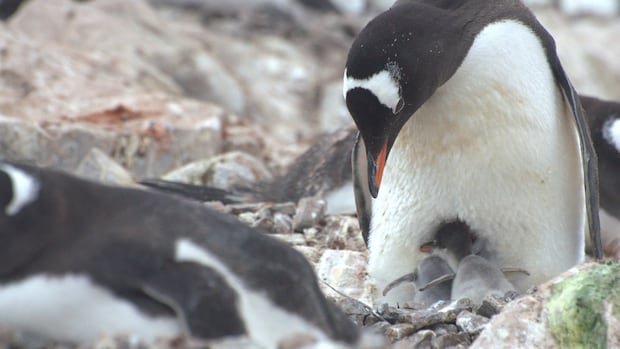
A recent study spanning a decade has discovered that penguins in Antarctica are rapidly adjusting their breeding behaviors in response to escalating temperatures linked to climate change. The research, featured in the Journal of Animal Ecology, focused on three penguin species and uncovered varying adaptation rates influenced by individual traits and susceptibilities.
Biologist Ignacio Martinez, from the University of Oxford, who spearheaded the study, highlighted the possibility of “winners and losers of climate change” among the species based on their ability to cope with the warming environment. Among the studied species – Gentoo, Adélie, and chinstrap penguins – the Gentoo penguins, known for their versatility in diet and year-round nesting proximity, exhibited the most significant adaptation. Their breeding season shifted approximately 13 days earlier on average, marking unprecedented rapid adjustments in vertebrate history.
Conversely, chinstrap and Adélie penguins, reliant on krill and extensive migration, experienced a more moderate shift of around 10 days in their breeding seasons. The study, conducted using 77 time-lapse cameras monitoring penguin colonies across Antarctica, emphasized the urgency of observing these species facing accelerated global warming rates, significantly exceeding the global average.
Despite the remarkable pace of adaptation observed over the decade, the distinct adaptation rates among species suggest potential conflicts over resources and territory in the future. Martinez cautioned that while Gentoo penguins appear to be gaining an advantage by establishing new colonies and increasing in numbers compared to the other species, the overall outlook for penguins is concerning.
Beyond penguins, a broader perspective reveals a trend of various species adjusting their breeding and migration patterns in response to climate change. Another recent study in Nature Communications analyzed 75 bird, mammal, and reptile species worldwide, observing earlier shifts in activities like egg laying, particularly accelerated in species inhabiting polar regions.
The lead author of the latter study, Viktoriia Radchuk, indicated that despite these changes, populations of species managed to maintain stability in numbers, implying a capacity to adapt to changing environments. While the penguin study did not yet assess the impacts of the breeding season shifts on population dynamics, Martinez and his team plan to delve into this aspect in future investigations.