
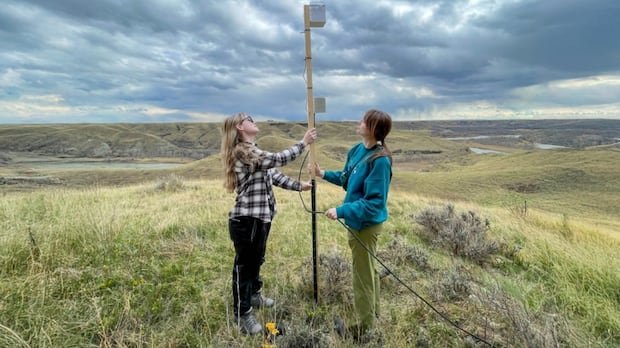
A groundbreaking research initiative at the University of Windsor involves two graduate students who are pioneering the real-time tracking of nocturnal bird migration across Canada. Natalie Emerick and Madison Bygrove have deployed 100 acoustic recorders from Vancouver Island to Newfoundland, strategically placed in various locations such as open fields and private backyards. These recorders capture and classify bird sounds using AI technology, with the data accessible through the Motus Audio platform.
The compact 3D-printed recorders are equipped with microphones that capture bird calls during the night, enabling the researchers to monitor avian communication patterns and species movements in the dark. This project represents a significant advancement in nocturnal flight call research, particularly in eastern Canada where such studies have been scarce.
Emerick highlighted the unexpected contributions from volunteers who host the recorders, emphasizing the diverse participation from individuals not traditionally involved in bird monitoring. By utilizing sophisticated software for data analysis, the researchers can efficiently process the vast amount of information collected each night.
The project’s network expansion was facilitated by leveraging existing Canadian migration monitoring networks and establishing connections with bird enthusiasts and researchers. The researchers are particularly interested in studying the impact of artificial night light on bird behavior, noting the potential disorientation caused by excessive brightness.
Looking ahead, Emerick and Bygrove aim to gain valuable insights during the fall migration season, refining their data analysis techniques for improved species identification. The Motus Audio technology, initially developed with government support, has enabled a nationwide “audio curtain” that tracks birds entering the Canadian boreal forest, offering valuable ecological data that can inform conservation efforts.
Ryan Norris, an ecologist supporting the project, emphasized the importance of this research in understanding bird movements across seasons and regions. Despite the challenges in identifying bird species from flight calls, the AI model has proven effective in analyzing the complex soundscape created by migratory birds overhead.
The ultimate goal of this research is to enhance our understanding of bird migration dynamics and potential threats faced by avian populations, ultimately contributing to conservation strategies. By creating a comprehensive audio monitoring network, researchers hope to shed light on the mysteries of avian migration and its ecological implications.