
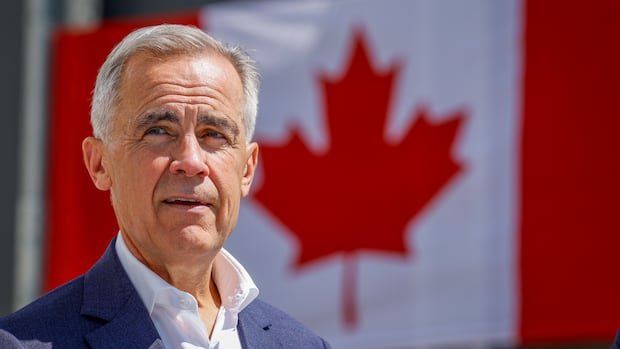
Prime Minister Mark Carney expressed his reluctance to use Canadian energy exports as a bargaining tool amid U.S. President Donald Trump’s threats of imposing additional tariffs on Canadian products. During a news conference in Red Deer, Alta., Carney emphasized the importance of reaching an agreement before the new 50% tariffs take effect on August 19.
While Carney acknowledged various options available to support the economy and address other issues if an agreement is not reached, he refrained from disclosing specific strategies. He stressed the focus on working towards a mutually beneficial agreement rather than resorting to leveraging energy exports.
When pressed on the possibility of leveraging Alberta oil specifically, Carney highlighted the significance of being a reliable supplier. He emphasized the trustworthiness of Canadians in fulfilling their commitments and underscored the importance of maintaining reliability in the energy sector.
Carney’s recent statements mark a shift from his previous stance during discussions with Canada’s premiers, where he indicated that all options were on the table in response to the looming tariff threats. Ontario Premier Doug Ford has been vocal in advocating for using energy exports as leverage in negotiations with the U.S., contrasting with Alberta’s stance that withholding energy is not a viable option.
The Trump administration’s proposed 50% tariffs are a response to perceived unfair trade practices involving provincial bans on U.S.-made alcohol, Canada’s protected dairy industry, and the integrated auto sector. Dominic LeBlanc, the federal minister overseeing Canada-U.S. trade, held discussions with U.S. Trade Representative Jamieson Greer to address the tariff threats and intensify negotiations.
The tariff threats coincide with ongoing talks related to the Canada-U.S.-Mexico Agreement (CUSMA), prompting Carney and Trump to agree on escalating negotiation efforts. The potential impact of the tariffs extends to provinces like B.C, Quebec, Manitoba, and Nova Scotia, which could face significant repercussions due to their decisions to remove U.S. liquor and wine from shelves.