
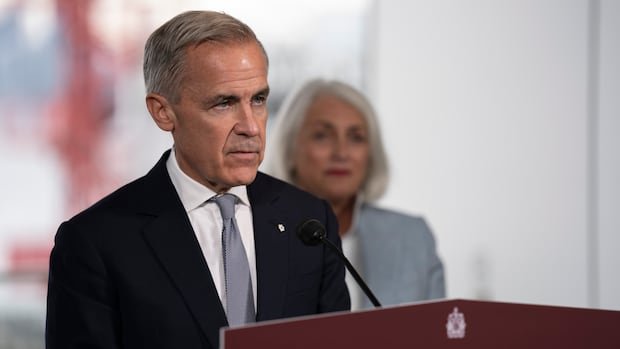
Prime Minister Mark Carney unveiled a $1.2 billion federal investment in safeguarding the ocean on Tuesday, coinciding with impending decisions on a new West Coast pipeline and the expansion of a key port in Metro Vancouver. Carney emphasized the potential impact of these projects, citing the increased maritime activity and the resulting pressure on marine habitats. He stressed the necessity of enhancing protective measures to ensure marine life preservation in case of mishaps.
The allocated funds will support various initiatives, including bolstering the Canadian Coast Guard’s monitoring capabilities for marine traffic, implementing a national near-shore weather prediction system, and establishing a plan for responding to oil spills involving marine mammals. Additionally, the plan entails upgrading search and rescue facilities, enhancing seabed mapping, and improving fisheries conservation efforts.
Carney’s announcement in North Vancouver preceded a looming deadline for Ottawa to determine the national interest status of a proposed pipeline connecting Alberta to British Columbia’s southern coast. The Prime Minister highlighted the economic diversification potential of the project, projecting the creation of nearly 150,000 jobs nationwide and a reduced reliance on the United States. Emphasizing a cautious approach, Carney reaffirmed the government’s commitment to balancing development with environmental protection.
Regarding the proposed pipeline, Carney assured that sensitive areas would be avoided, and the route would mirror the existing Trans Mountain pipeline, while maintaining the ban on tankers along B.C.’s northern coast. Meanwhile, as Alberta prepares for a referendum on separation from Canada, LNG Canada confirmed its intention to proceed with the Phase 2 expansion of its facility in Kitimat, B.C., aiming to double its capacity.
Carney has advocated for the expansion of the Port of Vancouver’s Roberts Bank terminal, emphasizing the need to boost export diversification away from the U.S. He underscored the terminal’s current capacity constraints and the potential benefits of reinforcing trade partnerships to fortify Canada’s economic independence. As vessel traffic at the port increases, Carney stressed the imperative of enhancing measures to safeguard marine ecosystems, particularly the endangered southern resident killer whales in B.C.’s south coast waters.
Recognizing the importance of addressing underwater noise affecting marine life, Carney revealed plans to maintain 2023 noise levels despite rising vessel traffic. Stringent conditions will govern construction activities, with an immediate halt in work if killer whales approach the site. Furthermore, investments will support Indigenous stewardship and restoration efforts in the Lower Fraser River Estuary, enhance fisheries enforcement with modern tools like drones, and promote collaborative governance and conservation in the Great Bear Sea region.
Coastal First Nations welcomed the funding as a step towards collaborative preparedness for increased vessel traffic resulting from major projects, citing the associated risks to coastal ecosystems. However, the Wilderness Committee criticized the disparity between the $1.2 billion ocean protection funding and the $10 billion proposed for the Roberts Bank expansion. The advocacy group expressed concerns over the potential impacts of Bill C-39 on species at risk, cautioning against undermining environmental safeguards.