
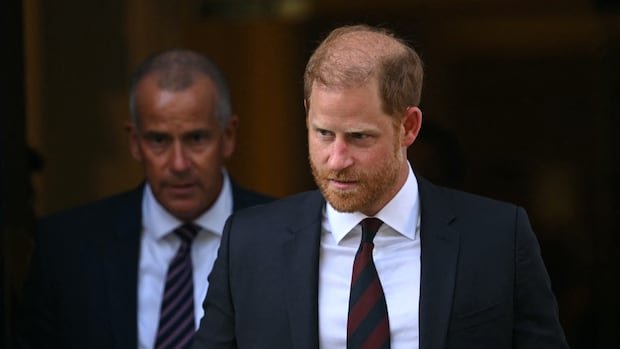
Prince Harry, the younger son of King Charles, along with other prominent British individuals, faced a setback in their privacy lawsuits against the publisher of the Daily Mail. Singer Elton John, actor Sadie Frost, and others accused Associated Newspapers of unlawfully obtaining information for stories published in the Daily Mail and the Mail on Sunday from the 1990s to 2011. However, Judge Matthew Nicklin emphasized that the claimants needed concrete evidence to prove the information had been acquired unlawfully.
In a summary of the ruling, the court highlighted that mere suspicion of unlawful sourcing was insufficient. Prince Harry, visibly emotional during his testimony in January, expressed disappointment with the court’s decision, calling it a “whitewash.” Associated Newspapers refuted the allegations, labeling them as smears and celebrating the ruling as a victory for journalism.
This case marked the conclusion of a series of legal battles Harry initiated against tabloid publishers for alleged illegal practices. While he received compensation in previous cases related to phone hacking, the recent verdict represented a change in judicial stance. The Duke of Sussex has been vocal about his struggles with press intrusion, attributing it to the tragic death of his mother, Princess Diana, in 1997.
Notably, Elton John and his husband, David Furnish, were also part of the lawsuit, citing defamation in articles published between 2002 and 2015. Furnish testified to the tabloids’ discriminatory portrayal of their relationship. The court’s decision was met with criticism from former editor-in-chief Paul Dacre, who denounced Harry’s privacy concerns given the revelations in his personal memoir.
Currently in the U.K. for charitable engagements, including promoting the Invictus Games, Harry’s visit has sparked speculation about potential family interactions amidst ongoing estrangement. Despite security concerns, British authorities have clarified that Harry, no longer a working member of the Royal family, will not receive automatic security protection during his stay.