
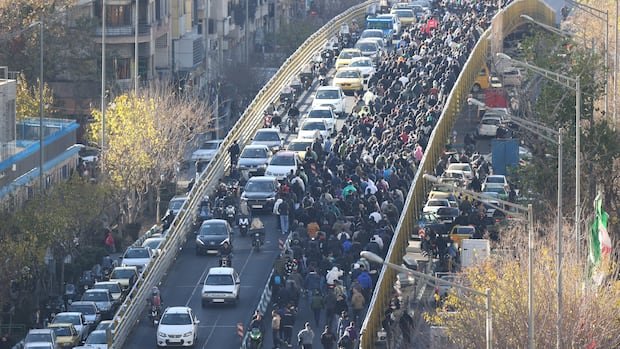
Protesters expressing frustration over Iran’s struggling economy staged a sit-in at Tehran’s Grand Bazaar on Tuesday, leading to security forces using tear gas to disperse the demonstrators as the market closed down. The protest at the historic Grand Bazaar, a significant hub in Iran’s economic and political landscape for centuries, indicated ongoing demonstrations as the country’s currency, the rial, reached a new low on Tuesday.
Reports from rights groups suggest that at least 25 people have lost their lives in Iran during the initial nine days of protests, which initially kicked off at the bazaar due to the currency devaluation and high inflation rates. The demonstrations have extended to various cities in western and southern Iran but have not reached the intensity seen in the nationwide unrest in 2022-23 following the controversial death of Mahsa Amini.
According to Hengaw, a Kurdish Iranian rights organization, 25 individuals, including four minors, have died, with over 1,000 arrests. HRANA, a network of rights activists, reported 35 fatalities, including two law enforcement members, and 1,203 arrests by Tuesday. The accuracy of these figures remains unverified by Reuters.
While the protests initially focused on economic grievances, they have evolved to encompass broader dissent, with some protesters openly challenging the country’s religious leaders. The economic situation is predicted to deteriorate further as Iran’s Central Bank significantly reduced the subsidized exchange rates for dollars, likely leading to price hikes that will burden consumers already grappling with diminished savings amid years of sanctions.
President Masoud Pezeshkian, a reformist figure, acknowledged the escalating crisis, emphasizing that the government’s capacity alone might not be sufficient to address the challenges at hand. International pressure on Iran persists, with U.S. President Donald Trump threatening to intervene on behalf of Iranian protesters if met with violence from security forces. In response, Iran’s Supreme Leader Ayatollah Ali Khamenei vowed to resist external pressures.
In the Grand Bazaar, demonstrators staged a sit-in, prompting nearby shops to close as security forces eventually resorted to tear gas to disperse the crowd. The clerical establishment in Iran continues to grapple with the aftermath of previous military strikes on Iranian facilities by Israel and the U.S. The recent unrest coincides with U.S. special forces seizing Venezuelan leader Nicolás Maduro, a move denounced by Iran due to its historical ties with Venezuela.
Iranian authorities have refrained from disclosing protester death tolls but acknowledged casualties among security personnel. Law enforcement officials have differentiated between protesters and rioters, pledging to take strong measures against those inciting violence. The protests have expanded beyond economic grievances to encompass broader demands for justice and better governance.
Pezeshkian has advocated for dialogue and reforms to stabilize the economy, including replacing the central bank chief and initiating subsidy reforms. The ongoing unrest in Iran has triggered a further decline in the rial’s value, underscoring the deepening economic challenges faced by the country.