
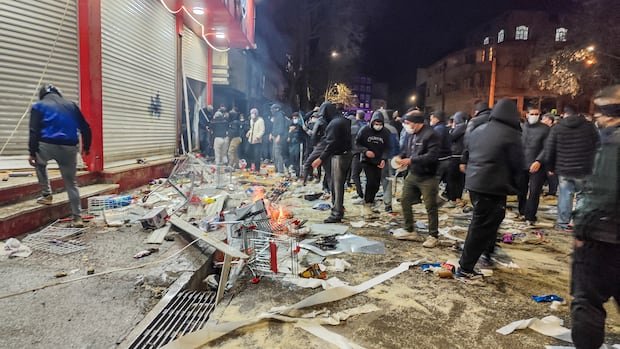
People gathered in the streets of Tehran on Thursday evening, according to witnesses, in a heightened phase of ongoing protests in Iran following a call by exiled Crown Prince Reza Pahlavi for a large demonstration. Immediately after the protests commenced, internet access and telephone connectivity in Iran were disrupted.
The demonstrations marked a critical moment to gauge whether the Iranian populace could be influenced by Pahlavi, whose father, Mohammad Reza Pahlavi, the Shah of Iran, fled the nation just before the 1979 Islamic Revolution and subsequently passed away in exile in 1980.
Participants in the protests voiced support for the shah, a sentiment that could have led to severe consequences in the past but now showcases the underlying frustration fueling the protests triggered by Iran’s struggling economy.
Thursday witnessed a continuation of the protests that emerged in various cities and rural areas across Iran on Wednesday. More markets and bazaars closed in solidarity with the demonstrations.
The escalating protests are intensifying the pressure on Iran’s civilian government and Supreme Leader Ayatollah Ali Khamenei. Reports from CloudFlare, an internet company, and the advocacy group NetBlocks indicated an internet blackout, both attributing it to interference by the Iranian government. Efforts to make calls from Dubai to Iran were unsuccessful, indicating a communication blackout.
Past instances of such outages have been succeeded by severe government crackdowns. The protests themselves have largely been leaderless, and the impact of Pahlavi’s call on the future of the demonstrations remains uncertain.
Pahlavi called for demonstrations at 8 p.m. local time on Thursday and Friday, urging the Iranian people to voice their demands collectively. The chants during the protests included anti-regime slogans and expressions of loyalty to the shah, with thousands visible on the streets.
While the protests drew support for the shah in some instances, it is unclear whether this backing is specifically for Pahlavi or a desire to revert to the pre-1979 Islamic Revolution era.
Iranian authorities appeared to be taking the planned protests seriously, with reports of security measures being implemented, including the use of drones for surveillance. Despite reports of security officials being injured or killed, Iranian officials have not acknowledged the full scope of the protests.
The protests come amid economic struggles in Iran, exacerbated by recent conflicts and currency devaluation. The response from Iranian officials to the protests and the potential intervention by foreign entities like the United States remain uncertain, with both sides exchanging warnings and criticisms.