
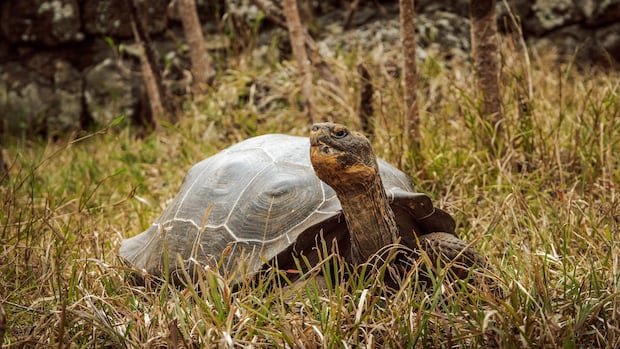
Giant tortoises have made a remarkable return to Floreana Island in the Galápagos archipelago after an absence of over 180 years. In a collaborative effort between scientists and local park rangers, 158 juvenile hybrids were reintroduced to the island, which was once home to an estimated 20,000 giant tortoises. This initiative, part of a captive breeding program initiated in 2017, aims to revive the population that was decimated by whalers, a devastating fire, and human exploitation in the 1840s.
The release of the young tortoises was a momentous occasion for conservation biologist James Gibbs, who likened it to watching his children take their first steps. These juvenile tortoises, expected to reach up to 600 pounds in the next two decades, are part of a larger plan to gradually release 700 tortoises on Floreana. They carry significant genetic traits of the extinct Floreana species, making their reintroduction crucial for the island’s ecosystem.
Biologist Washington Tapia emphasized that beyond increasing numbers, the reintroduction of the tortoises is about restoring a lost lineage and enhancing the island’s biodiversity. The hope is that these juveniles, aged between eight and 13 and weighing 30 to 50 pounds, will contribute to the island’s ecosystem recovery over time, given their potential lifespan of over a century.
The release operation was a labor-intensive process, with park rangers carrying the juvenile tortoises uphill through challenging terrain to their designated release sites. Divided into groups, some were released in drier lowland areas while others were set free in moister highland regions. Sharing the island with around 200 human residents and various wildlife, the tortoises face threats from non-native species like rats, cats, and invasive plants.
To monitor the tortoises’ movements post-release, each one has been equipped with GPS trackers. Researchers will track their progress in real time to ensure their successful acclimatization to their new environment. This comprehensive monitoring approach aims to safeguard the tortoises and support their transition back into their natural habitat.