
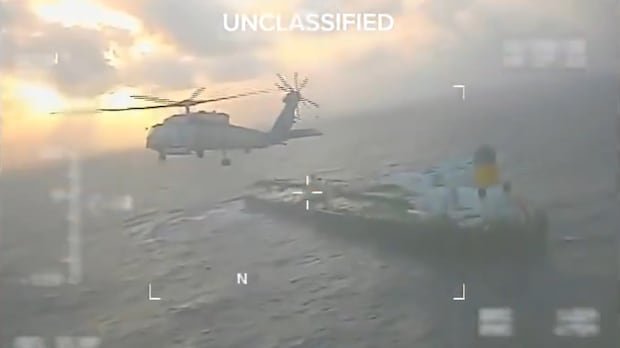
Over the weekend, Secretary of State Marco Rubio was asked about the potential U.S. government intervention in governing Venezuela after the detainment of President Nicolás Maduro. Instead of addressing that, Rubio emphasized the enforcement of a U.S. blockade on sanctioned oil tankers as a leverage for policy changes in Venezuela. This blockade, announced by President Donald Trump in December, is intended to influence Venezuelan policy. Rubio clarified on CBS News’ Face the Nation that this blockade is what the president refers to when discussing Venezuela’s governance.
The blockade was unveiled by Trump on December 16 through a post on his social media platform, Truth Social. Trump declared a comprehensive blockade on all sanctioned oil tankers entering and leaving Venezuela, citing reasons such as the regime’s classification as a “foreign terrorist organization” due to various illicit activities. These sanctioned tankers are listed by the U.S. Treasury Department and are part of a clandestine fleet involved in illegal crude oil transportation worldwide.
While Trump labeled the action as a blockade, some officials, including Rubio, prefer to call it a “quarantine” targeting unlawful activities to avoid potential war implications. A quarantine allows the search and seizure of vessels lacking proper flags or illegally displaying another country’s flag. Despite the distinction in terminology, the blockade’s legal basis for boarding and seizing sanctioned ships is supported by legal experts.
To date, only two vessels have been intercepted, one of which was seized before the blockade announcement and the other not on the sanctioned list. Plans to intercept more sanctioned vessels are in progress. Despite these efforts, several oil tankers under U.S. sanctions have managed to evade the blockade by concealing their locations or disabling transmission signals, challenging the blockade’s effectiveness.
The blockade’s impact on Venezuela’s economy is significant, as oil exports, the primary revenue source for the state-owned PDVSA, have been severely disrupted. If the blockade persists, it could lead to a substantial decline in Venezuela’s oil production, potentially affecting the country’s economy.