
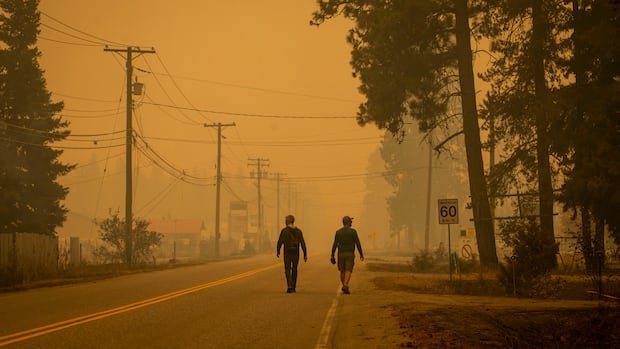
Health experts and advocates have raised alarms over deficiencies in monitoring air quality in rural British Columbia, warning that some areas could be at risk of hazardous levels of wildfire smoke without access to precise local information. This concern arises as the health impacts of wildfire smoke become more evident, prompting the installation of new monitoring stations in various parts of the province to address these gaps.
Air quality monitoring is typically overseen by federal and provincial authorities, with Environment Canada reporting that the National Air Pollution Surveillance program comprises 286 sites distributed across all provinces and territories. Despite this network, significant gaps in coverage persist, particularly in rural and remote regions, as highlighted by Christopher Lam, the B.C. Lung Foundation’s president and CEO. He emphasized that local communities may remain unaware of their pollution levels and associated health risks due to the lack of monitoring infrastructure.
Climate change has led to extended fire seasons and drier environments, resulting in more severe and widespread wildfires. In some isolated communities, residents are already modifying their routines to cope with wildfire smoke.
For instance, in Gold River, nine-year-old Roland Latimer diligently checks the air quality daily before venturing outside, given his asthma condition. His family’s experience underscores the importance of accurate, local air quality data to safeguard health and make informed decisions during smoky conditions. Tricia Latimer, Roland’s mother, highlighted the challenges they faced before the installation of nearby air quality monitors, which now provide real-time information for better protection.
The tragic death of Carter Vigh, a nine-year-old from 100 Mile House who succumbed to an asthma attack during the severe 2023 wildfire season, has spurred efforts to enhance air quality monitoring in the province. Carter’s legacy lives on through initiatives like Carter’s Project, a collaboration between his family and the B.C. Lung Foundation, which has deployed outdoor air quality monitors in various communities, including Gold River and the Cariboo region.
Beyond fatalities, the health repercussions of wildfire smoke extend far beyond, with an estimated 5,400 acute deaths and 82,100 premature deaths globally attributed to the 2023 Canadian wildfires. Sarah Henderson, from the B.C. Centre for Disease Control, emphasized that these deaths represent only a fraction of the overall health burden, as smoke particles can trigger various health issues beyond respiratory complications.
Researchers like Chris Carlsten at the University of British Columbia are investigating the detrimental effects of poor air quality on human health. Studies suggest that wildfire smoke may pose greater risks than other forms of pollution, impacting not just the respiratory system but also potentially harming blood vessels and the central nervous system. Health officials advise individuals to take precautions such as limiting outdoor activities during smoky periods and enhancing indoor air quality to mitigate health risks associated with wildfire smoke exposure.