

The Court of Appeal in Saskatchewan has dismissed an effort to reinstate a lawsuit that contested the provincial government’s plans to expand fossil-fuel power plants.
Climate Justice Saskatoon, which initiated the legal action along with seven local residents, expressed disappointment in a news release regarding the ruling.
The organization described the ruling as a “setback,” yet emphasized that it does not diminish the pressing demand for “climate justice.”
“We remain committed to our stance that the province must be held responsible for its contribution to climate damage and its neglect of obligations to both present and future generations,” the statement indicated.
Amy Snider, one of the plaintiffs, voiced her frustration over the ruling.
“The province will continue to emit more greenhouse gases than what is mandated by both international and Canadian law,” she remarked.
Snider mentioned her intention to learn from this experience and to keep urging the provincial government to take action against climate change.
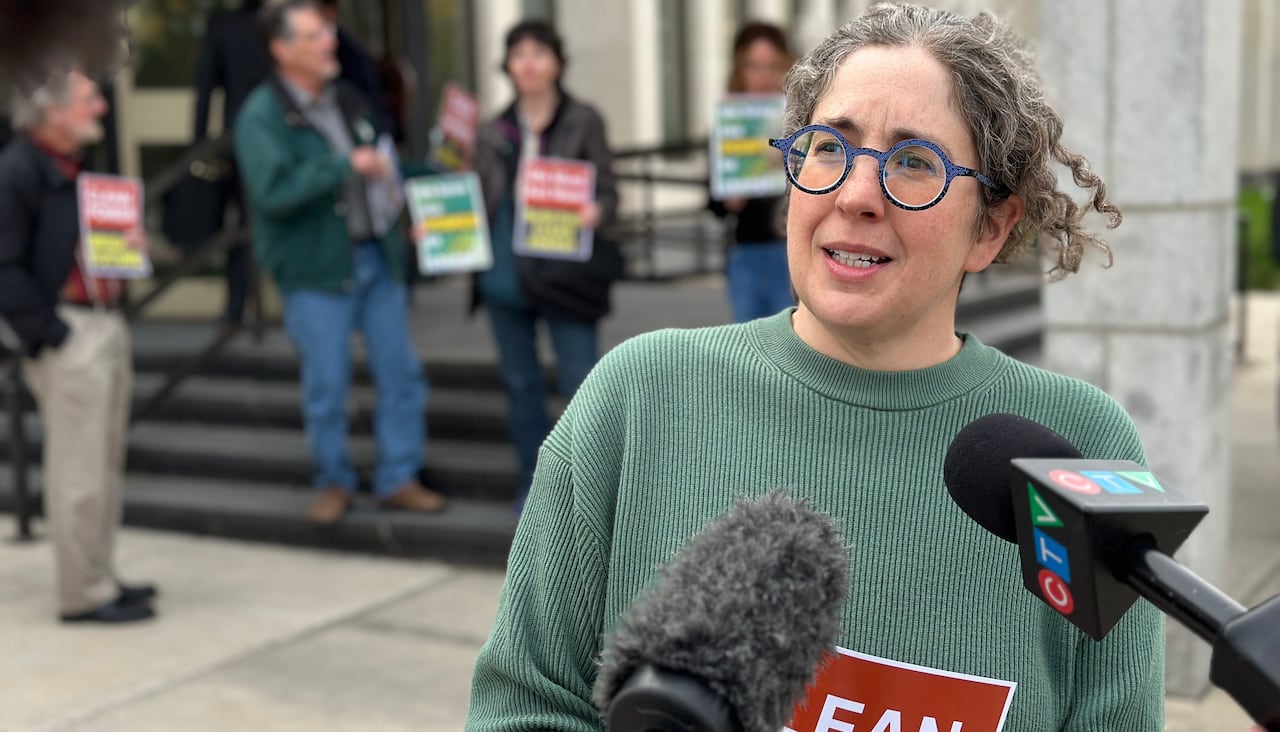
Amy Snider, one of the applicants in the court case, is seen in a file photo. She says she plans to learn from the experience. (Kirk Fraser/CBC)
In 2023, Climate Justice Saskatoon and seven residents initiated a lawsuit against the province, SaskPower, and Crown Investments Corporation.
The lawsuit claimed that the government infringed upon their Charter rights due to “unabated fossil-fuel fired electrical generation that causes and exacerbates the harm and intensity of dangerous climate change.”
The group contended that the Canadian Charter of Rights and Freedoms should be interpreted as safeguarding their rights to a safe climate.
The government sought to have the lawsuit dismissed last year.
Justice Holli Kuski Basset of the Regina Court of King’s Bench ruled in favor of the government. This decision did not assess the validity of the lawsuit, but rather whether the court should entertain the case.
Basset determined that the lawsuit did not present a reasonable claim and that its arguments would be “not justiciable,” meaning they could not be reviewed by the court.
Climate Justice Saskatoon appealed the decision to the Court of Appeal, which delivered its ruling on Thursday.
Two of the judges, Justice Jerome Tholl and Justice Neal Caldwell, concurred with Basset’s judgment, asserting that it was beyond the court’s purview to dictate how the government should formulate policy.
“This appeal does not adjudicate a debate regarding climate change. The parties do not dispute its existence,” Tholl noted in the majority opinion.
The focus of the appeal was whether the application had been appropriately dismissed, Tholl explained.
Justice Julyne Drennan, the third judge, dissented.
Drennan maintained that there was a reasonable basis for the lawsuit, that the claims were subject to judicial review, and that the case should have proceeded.
In a statement, the Ministry of Justice expressed confidence in the court’s decision to dismiss the appeal.
“The Government of Saskatchewan will continue to uphold its decisions — made in the best interests of Saskatchewan residents — to provide reliable and affordable power for our province,” the statement indicated.
Read the full decision here:
2nd climate lawsuit set for arguments next week
This ruling arrives just ahead of another upcoming climate lawsuit set to be argued.
The Saskatchewan Environmental Society filed a lawsuit last year requesting a judicial review of the provincial government’s decision to enhance coal usage and refurbish existing coal-fired power plants to extend their operational life beyond 2030.
The government’s decision will enable its two coal-fired plants near Estevan — the Shand and Boundary Dam stations — along with the Poplar River plant near Coronach, to continue operating long after the federal deadline for their closure.
Saskatchewan stands as the only province in Canada that is prolonging coal’s role in electricity generation. Other provinces, such as Ontario and Alberta, have either phased out coal or have pledged to do so by 2030.
A ruling from Court of King’s Bench Justice Shawn Smith on January 12 determined that it was not the court’s responsibility to evaluate the Saskatchewan government’s decision.
The environmental society has appealed this ruling to the Court of Appeal, with arguments scheduled for Tuesday.