
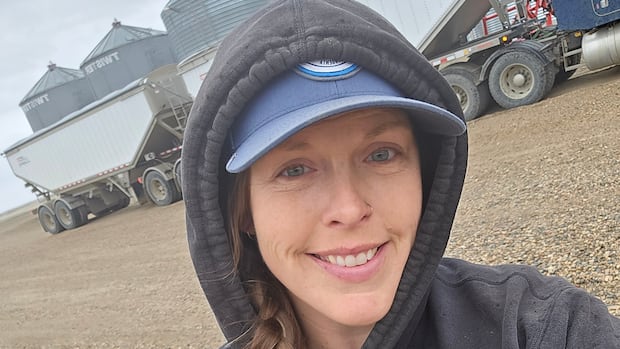
Sarah Leguee, a farmer from the Weyburn region, felt hopeful over the weekend when the expected rain did not materialize.
However, a heavy downpour arrived on Monday.
“We thought maybe we had escaped the worst here, but suddenly we faced a torrential rainstorm and that changed everything,” she remarked.
The 2.5 inches of rain that drenched her crops have downgraded her lentils and made harvesting the durum wheat more challenging, she noted. Additionally, the road she uses to access the wheat is now submerged.
“We’ll have to endure the loss and continue as we always have; that’s just how it is, I suppose.”
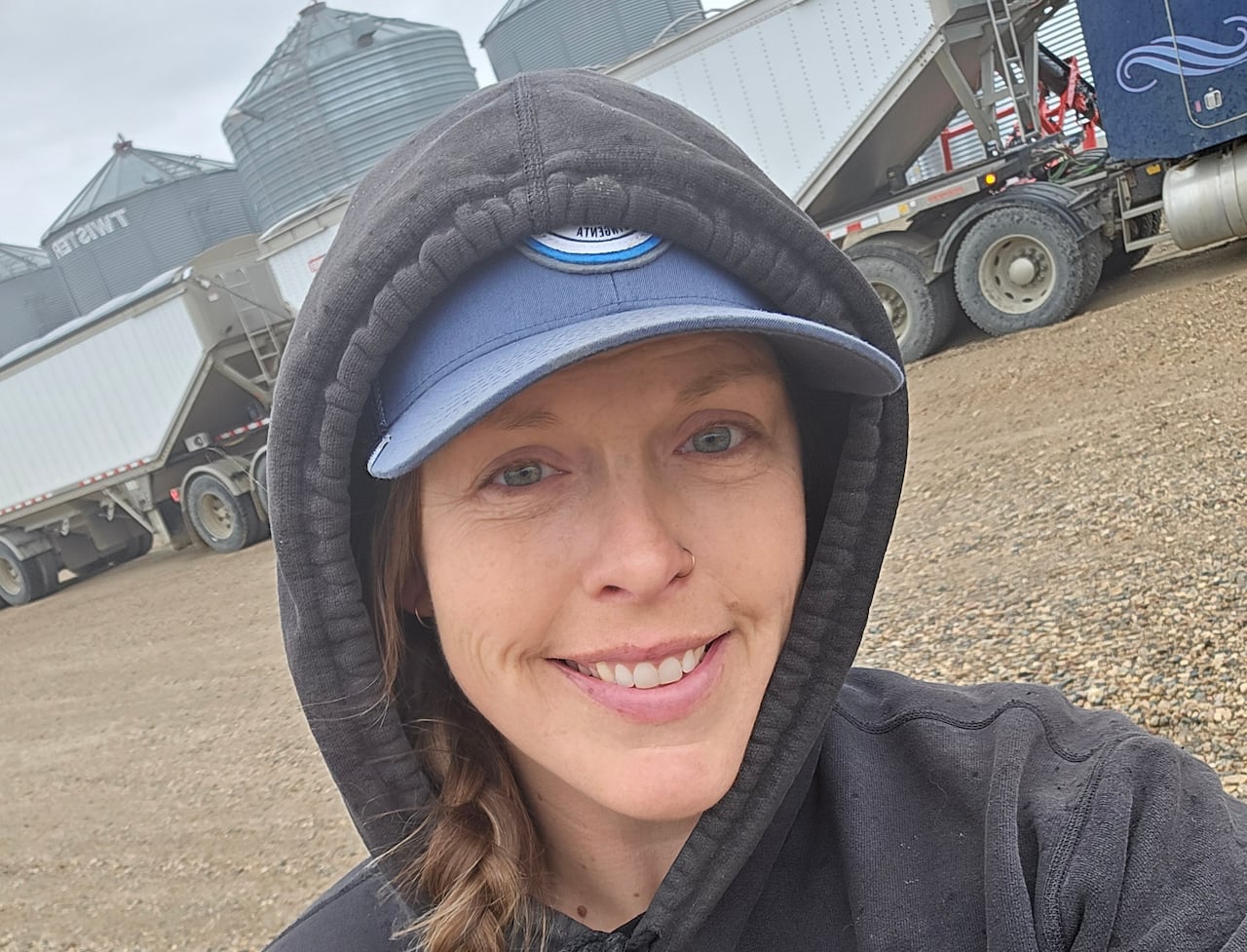
Sarah Leguee mentions she is behind her typical harvesting schedule. (Submitted by Sarah Leguee)
This situation comes at the end of a challenging summer characterized by wet conditions in June, drought in July, and now rainfall during harvest season, Leguee explained.
“Honestly, we don’t even know what normal looks like anymore, as it changes every year. This harvest has certainly been a challenge.”
Farmers are grappling with rain and hail that have impacted their crops after a tough summer, resulting in financial losses and unpredictability.
According to the provincial government’s crop reports, farmers have harvested less than half of their usual yield for this time of year: only 18 percent of crops are in storage, compared to the five-year average of 39 percent.
The federal AgriStability program is adapting to better support losses experienced by crops and livestock due to adverse weather conditions.
It has pushed back the signup deadline for the 2026 program to October 1 for those who missed the April cutoff.
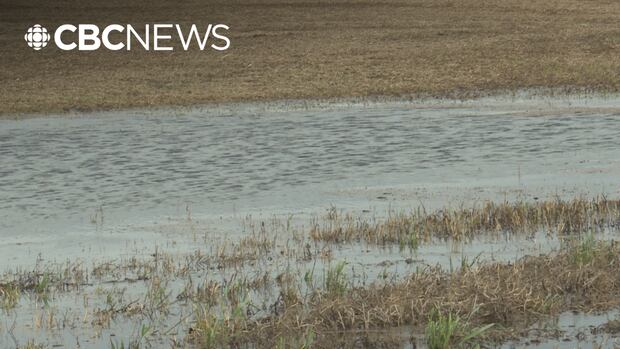
Significant rainfall has delayed the harvest and has the potential to damage crops, reducing grades and profits. Farmers also face tariffs on parts and machinery, and a 60 percent hike in fuel costs.
The interim payment rate has increased to 75 percent of the projected final benefit, up from the previous 50 percent.
Harvest at ‘a stand-still’
Davidson Ugheoke, an agrologist with the provincial government, stated that it is difficult to assess the situation since only a portion of the harvest has been completed.
“I wouldn’t say this is the worst we’ve seen, but it does have a significant impact on the harvest. It has delayed it considerably.”
He highlighted that the primary concern is the unsafe conditions for operating machinery in the fields, necessitating a postponement in harvesting.
“I want to stress the importance of safety when operating this equipment in the fields. Make sure to scout and assess the conditions of your fields before bringing in heavy machinery,” he advised.
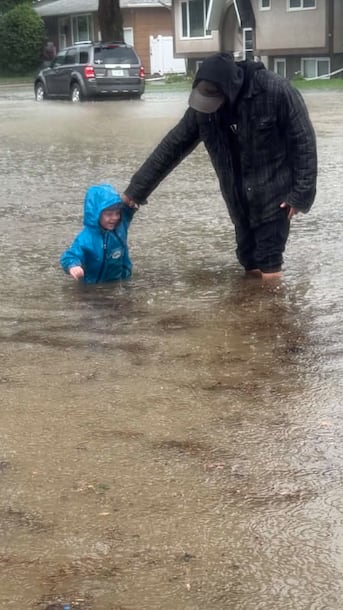
Saskatchewan experienced severe rainfall during the September long weekend. CBC Meteorologist Allister Aalders explains the reasons behind the wet weather.
Ryan Scragg, the reeve of the RM of Garden River located northeast of Prince Albert, remarked that the rain has further delayed the harvest.
“It has brought us to a complete stand-still. The fields are muddy, the yard is muddy, and the grain is tough; we cannot do anything at the moment,” he stated.
Scragg noted that his operation began seeding late due to the snowfall in May.
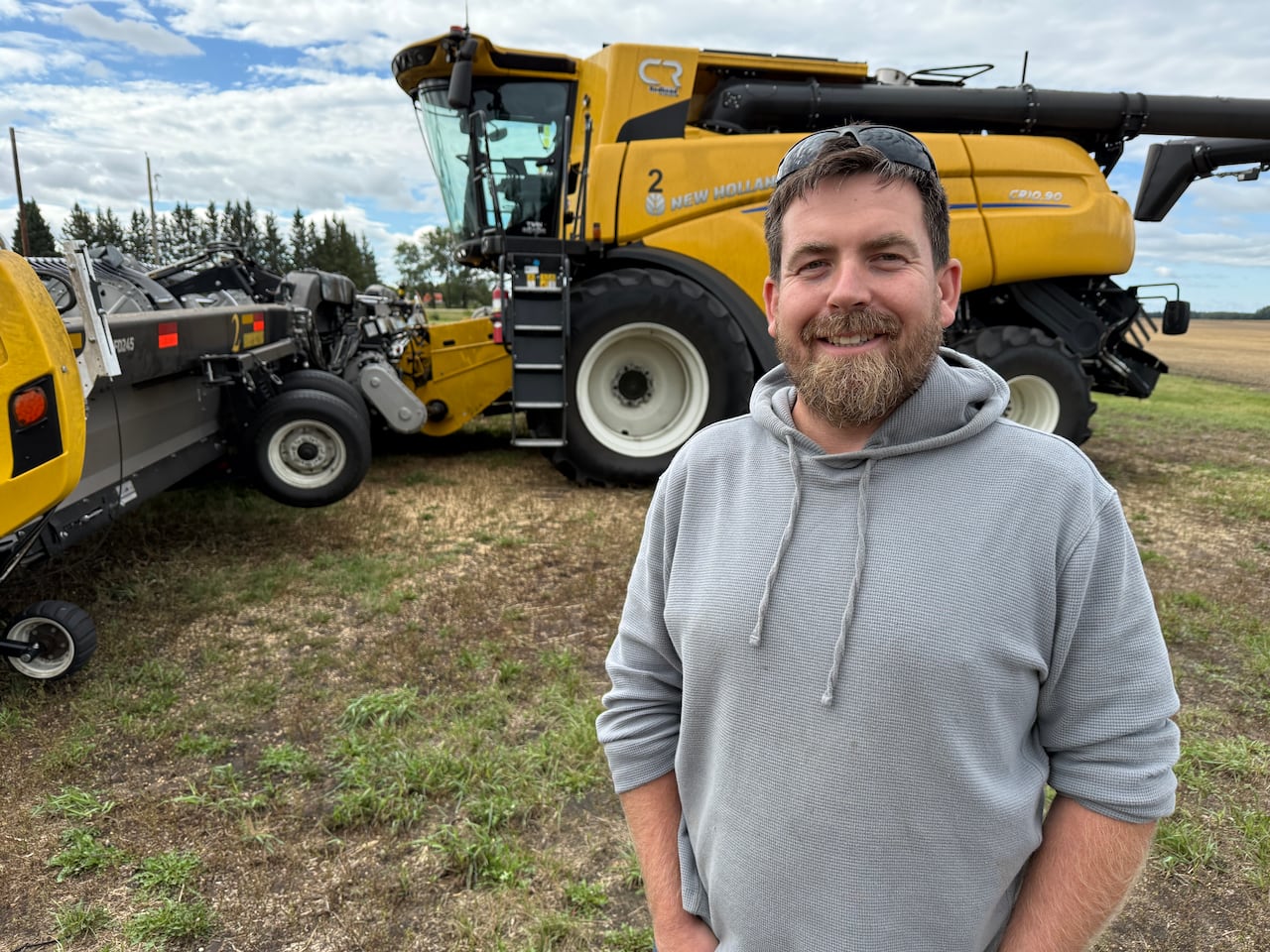
Ryan Scragg indicates that the water has downgraded his crops and delayed their harvest. (Lisa Risom/CBC)
“We were two weeks behind in seeding, and throughout the season, we have remained that two weeks behind, so this further pushes us back.”
He hopes to return to the fields within the next three to four days. Meanwhile, he is concerned about the financial repercussions.
“Wet crops lead to lower grades, and lower grades mean less revenue.”