
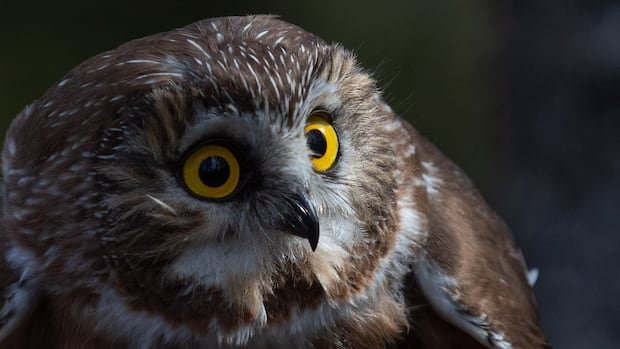
This winter, the heavy snowfall in Nova Scotia is leading small owls to venture into more human-inhabited regions in search of food. The Northern saw-whet owl, smaller than a robin, is facing challenges finding its usual prey of mice, voles, and shrews due to the snow cover. Randy Lauff, a biology instructor at St. Francis Xavier University specializing in boreal and Northern saw-whet owls, notes that owls possess excellent eyesight and hearing abilities, making them proficient predators.
Unlike larger owls that can track rodents beneath deep snow using their strength, saw-whet owls struggle due to their petite size. As a result, these owls are increasingly seen in rural and urban areas this winter, particularly near bird feeders where they can hunt mice and small birds attracted to the feed.
At Hatfield Farm in Hammonds Plains, N.S., a saw-whet owl made a rare appearance, seeking prey in the barn. Owner Cherie Hatfield mentions the abundance of snow cover prompting predators to search for food. To avoid distressing the owl, the staff left the barn door open for it to leave at its convenience.
Lauff advises Nova Scotians who spot saw-whet owls in their yards to maintain a respectful distance to minimize disturbance. He emphasizes the importance of allowing the owl space to hunt undisturbed, especially during the critical post-dusk hunting period when the owls are most active.
Snow cover presents both advantages and challenges for birds of prey like owls. While the contrasting color of prey against the white snow aids visibility, icy crusts can impede hunting efforts. Hope Swinemar from Hope for Wildlife notes that harsh winters can lead to increased starvation among birds of prey, with some species like barred owls falling victim to road accidents while hunting.
Despite the winter challenges, most wildlife can adapt to varying weather conditions. Swinemar highlights the resilience of animals in coping with harsh winters, underscoring their ability to endure and survive in their natural habitats.