
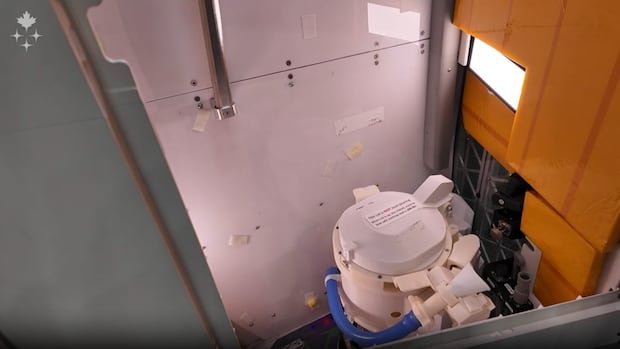
When four individuals traveled 406,771 kilometers into space for the first time, they were accompanied by a toilet. It is essential to test crucial aspects of human life if we plan to venture farther into space. The story of the Artemis II’s toilet, officially named the Universal Waste Management System, unfolded in various stages.
Following the successful launch of Artemis II on April 1, the crew encountered an immediate issue with the toilet. Mission specialist Christina Koch reported a problem with the toilet approximately an hour after liftoff. NASA astronaut Stan Love, the crew’s contact at mission control, speculated that loose oxone beads jammed the fan separator, causing the malfunction. After some troubleshooting, Koch managed to resolve the issue by rebooting the toilet.
Koch humorously referred to herself as the “space plumber,” emphasizing the importance of the toilet on board. NASA officials later explained that the problem was likely due to the system automatically shutting off because the pump lacked sufficient priming with water.
The Universal Waste Management System, located in a small closet on the floor of the Orion capsule, differs from a standard toilet due to the absence of gravity. Waste is contained in sealed bags under the toilet, while each astronaut has a hose for liquid waste disposal, which is vented into space multiple times a day.
Shortly into the mission, the crew faced a challenge with frozen urine lines, which was resolved by rotating the capsule to expose the vents to sunlight. Additionally, a mysterious smell emanated from the hygiene bay, prompting investigations by NASA, ruling out potential causes.
Despite initial successes, the crew faced further challenges with the toilet, leading to the use of Collapsible Contingency Urinals as a backup plan. Technical issues were attributed to prevention processes against bacterial structures in the lines.
Experts acknowledged the expected glitches during the maiden voyage of such devices, emphasizing the complexity of systems involving fluids, mechanical, and electrical components in spacecraft. The hope is that future missions will address these bathroom-related challenges to ensure smoother operations during extended space travel.