

Welcome to our weekly newsletter, where we explore environmental trends and innovative solutions that are guiding us toward a more sustainable future.
Hello, I’m Bridget! Upon discovering Urban Future Walks, I immediately felt compelled to share my thoughts on it. I participated in the final in-person walking tour of the year, gaining fresh insights into the buildings and infrastructure I regularly see in downtown Vancouver.
This week:
- Why a student is offering tours showcasing climate solutions hidden in Vancouver
- The Big Picture: Wildfire smoke alters moths
- A movement to eliminate cars during school drop-off and pickup
Why a student is offering tours showcasing climate solutions hidden in Vancouver
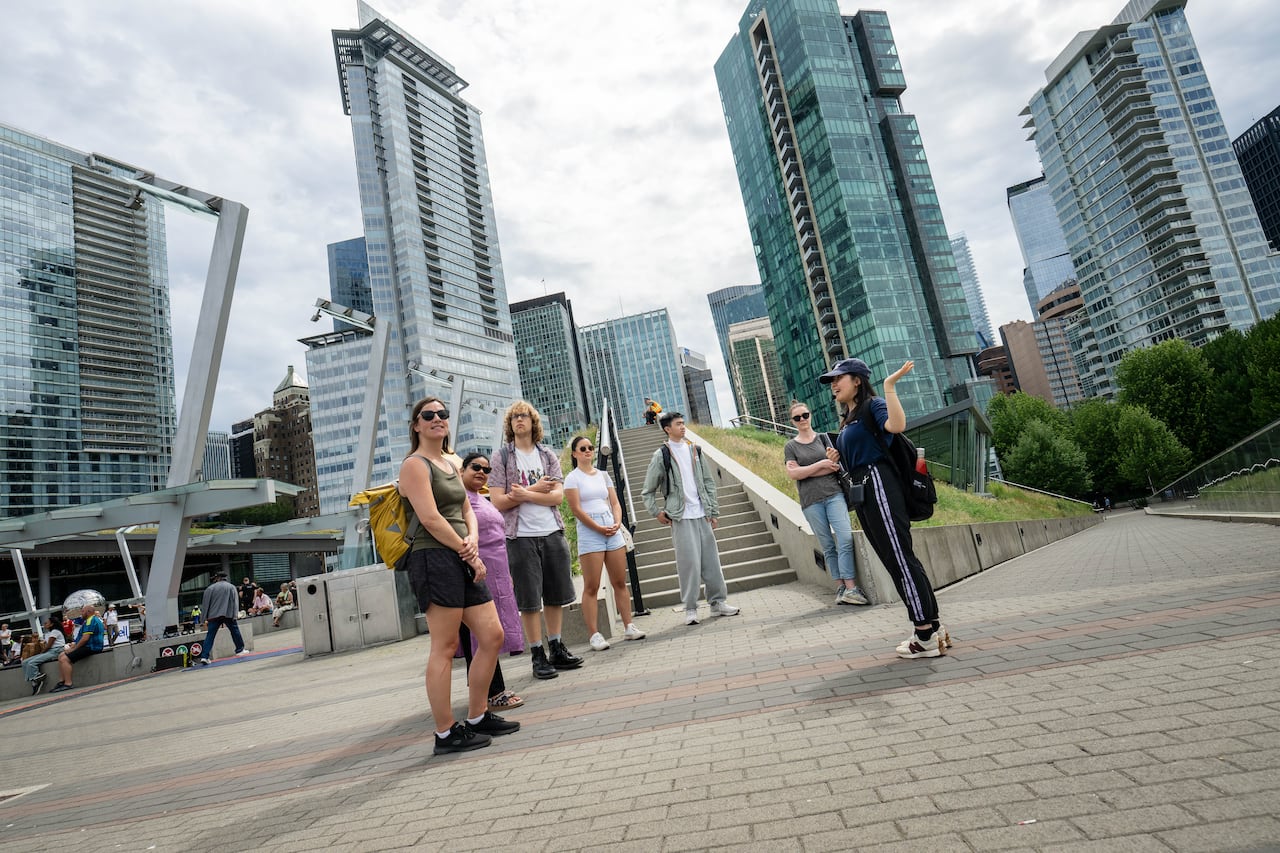
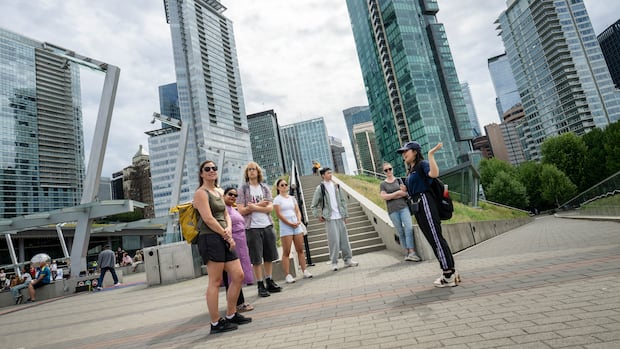
UBC PhD student Yunfei Li, right, leads a two-hour guided walking tour of downtown Vancouver where she teaches participants about green infrastructure around the city. (Paul Joseph/UBC)
Yunfei Li is positioned in the center of Robson Square, a bustling pedestrian plaza in downtown Vancouver, recognized as one of the city’s most frequented public areas.
During lunchtime, the plaza buzzes with food trucks and local artists, serving as a popular starting point for numerous marches and demonstrations.
However, Li informs her walking group that this vibrant scene is a relatively recent development.
Originally transformed into a pedestrian plaza for the 2010 Winter Olympics, the city has since maintained this designation.
She elaborates that this marks a significant shift from car-centric urban planning toward more sustainable and people-friendly community designs.
This marks the initial stop of a two-hour guided tour in Vancouver, where Li has educated hundreds on green infrastructure, covering topics from climate-sensitive architecture to sustainable transit systems.
Her mission is to transform the prevalent anxiety regarding climate issues into a positive and interactive experience that fosters discussion rather than fear.
Rediscovering the city
Li facilitates these both in-person and virtual tours as an aspect of her doctoral research at the University of British Columbia’s Institute for Resources, Environment and Sustainability.
Urban Future Walks was developed in collaboration with her advisor, climate scientist Simon Donner. Participants are asked to complete surveys before and after the tours to assess how their feelings and perspectives on climate change evolve, and whether face-to-face interactions influence these changes.
While her research includes tourists, local residents have also reported a newfound appreciation for their city and the structures they encounter daily.
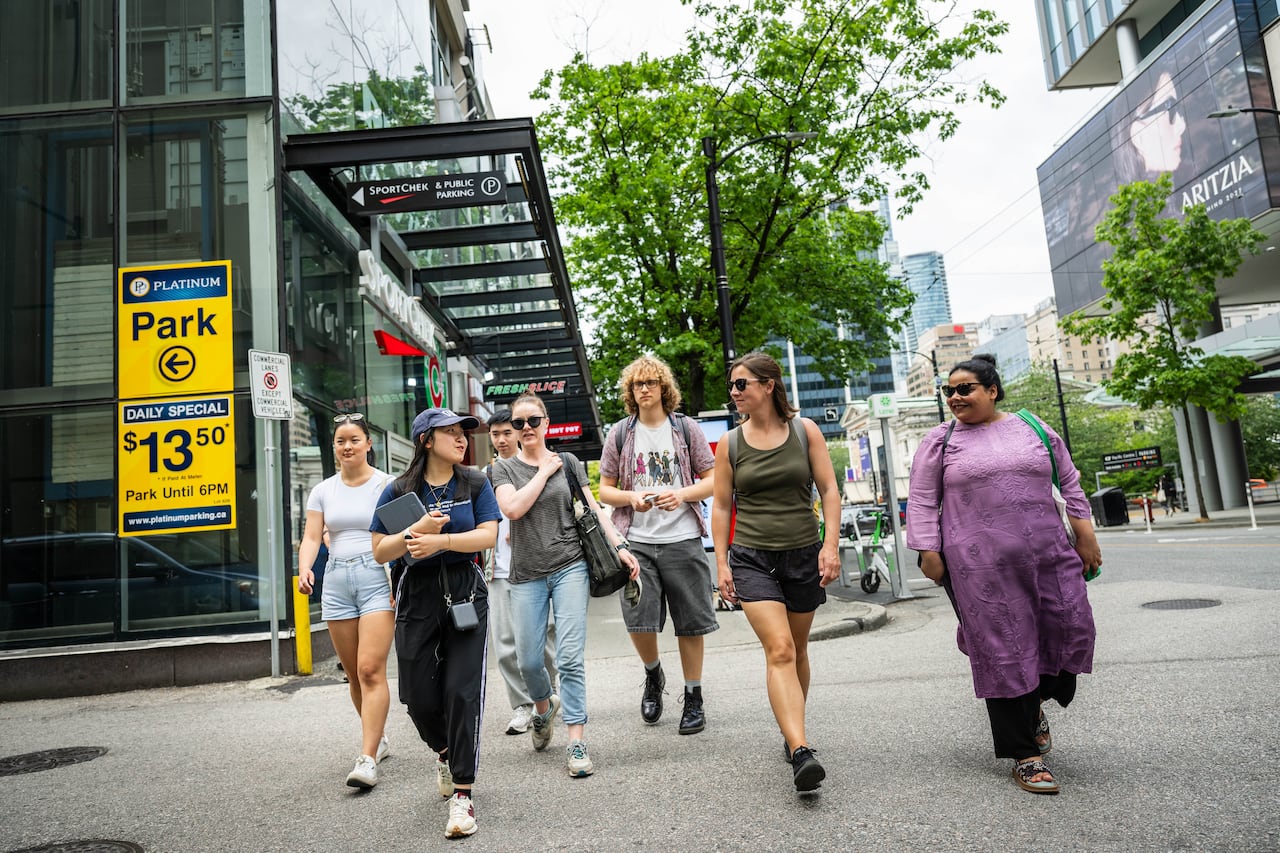
UBC PhD student Yunfei Li has guided hundreds of locals and tourists of various ages on walking tours of Vancouver this year. (Paul Joseph/UBC)
One of the stops featured a section of permeable bricks on Richards Street, where Li demonstrated how rainwater filters through and drains into an underground system designed to manage approximately 11 million liters of rainwater annually. Participant Alex Guanzon remarked that he had never been aware of this before.
Li elaborated on how this infrastructure is designed to be effective, visually appealing, and unobtrusive to pedestrians.

Yunfei Li on Richards Street, explaining to a tour group how the rainwater infrastructure system works to protect the bike lane and divert water into an underground trench system. (Bridget Stringer-Holden/CBC)
Halle Phoenix from the Vancouver Airport Authority organized the walk for Guanzon and his colleagues as part of the organization’s commitment to achieving net-zero emissions by 2030.
“It’s fascinating to see the various approaches the city employs to progress toward a sustainable future,” she noted. “It transforms your feelings about climate change from fear to enthusiasm.”
Systemic changes
“Many individuals feel quite powerless because they are unaware of what actions can be taken or fail to see any [positive] developments occurring,” stated Li.
“When the focus is solely on the severity of the consequences and the gravity of the issues, it can actually heighten people’s anxiety levels.”
Instead, she aimed to illustrate to participants that climate action is already in progress, often concealed in plain sight, providing them with reasons to remain hopeful and advocate for change.
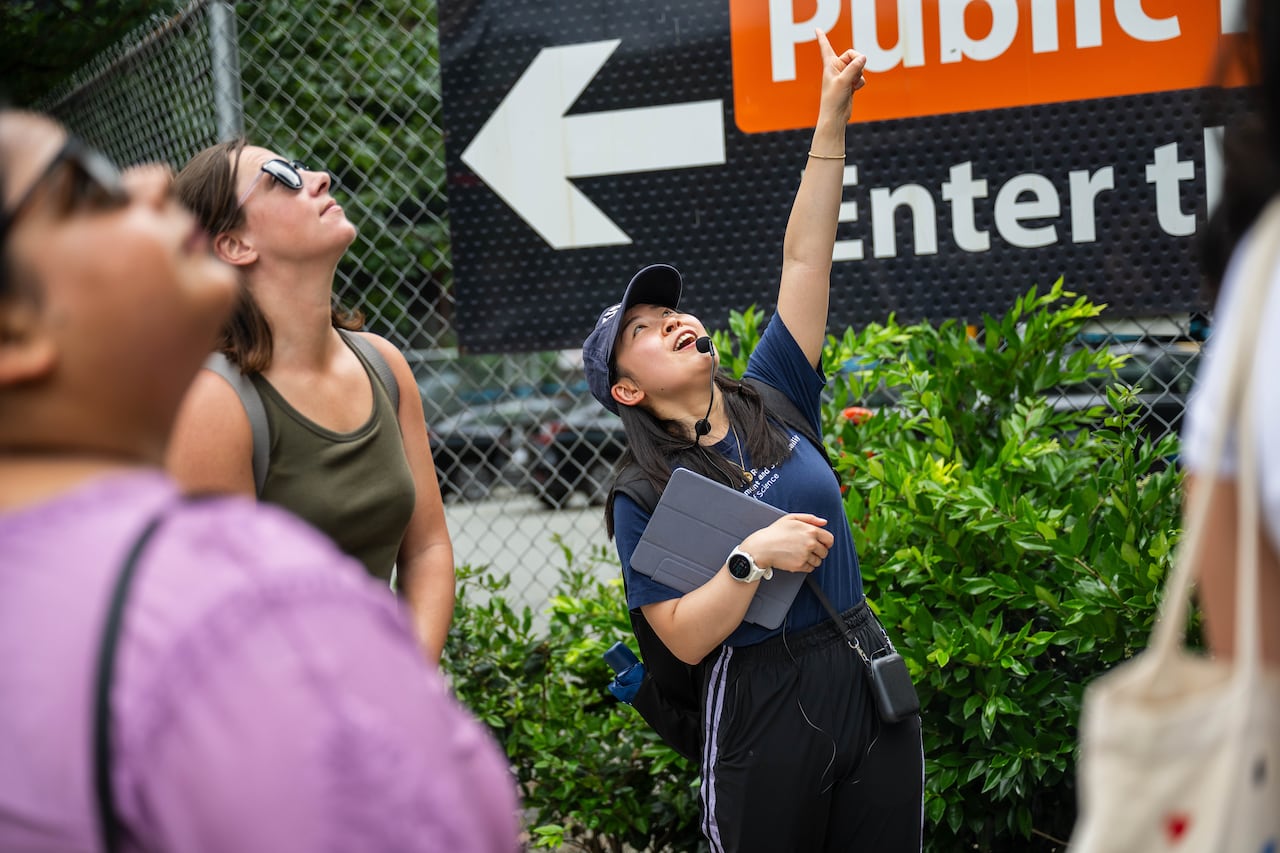
Yunfei Li has observed that even those who reside downtown uncover new insights about the structures behind the buildings they encounter daily. (Paul Joseph/UBC)
During the tour, Li also discussed political frameworks and the importance of considering the broader context.
“The design of the system influences everyone’s behavior,” she remarked.
“The primary message we want to convey is that individual actions are significant and valuable. However, to truly realize our low-carbon future, we must also address systemic changes.”
Li intends to spend the fall analyzing survey responses and plans to resume the tours next summer.
— Bridget Stringer-Holden

Previous editions of What on Earth? are available here. The CBC News climate section can be found here.
Don’t miss our podcast and radio show. In our latest episode: Meet the new host of your favorite climate change podcast, Johanna Wagstaffe, a CBC science journalist, meteorologist, and seismologist. Throughout the summer, she and the team have been preparing exciting new ideas and stories to help you understand the evolving climate landscape, especially during these warming times. Interested? Here’s a brief overview of what to expect in the upcoming season.

What On Earth releases new podcast episodes every Wednesday and Saturday. Find them on your preferred podcast platform or on demand at CBC Listen. The radio program airs Sundays at 11 a.m., and at 11:30 a.m. in Newfoundland and Labrador.
Visit the CBC News Climate Dashboard for real-time updates on unprecedented weather events and current conditions nationwide. Set your location to compare today’s temperatures with historical averages.

(CBC)
Reader feedback
Following our last summer’s issue on August 13, Sandy James expressed: “Just a brief [email] to say how much I appreciate receiving this and the additional insights into science-related topics.”
Contact us at whatonearth@cbc.ca (and feel free to send photos there as well!)
The Big Picture: Wildfire smoke deforms moths

(Rosa Alicia Castillo Salazar)
This is a forest tent caterpillar moth that suffered from wildfire smoke exposure during its caterpillar stage, resulting in deformed wings. A recent study conducted by biology professor Emma Despland and her team at Concordia University found that roughly 30 percent of forest tent caterpillar and spruce budworm moths exposed to wildfire smoke during their caterpillar phase developed wings that were either folded or crumpled, which is two to three times the rate of those not exposed.
The researchers emphasize the necessity of examining the effects of wildfire smoke, rather than focusing solely on the wildfires themselves, on ecosystems.
“What are the consequences of wildfires on biodiversity outside the immediate flames?” Despland stated. “Additionally, given that insect outbreaks and fires are the two primary natural disturbances in boreal forests, what implications do these findings have for their interactions? We simply do not know.”