
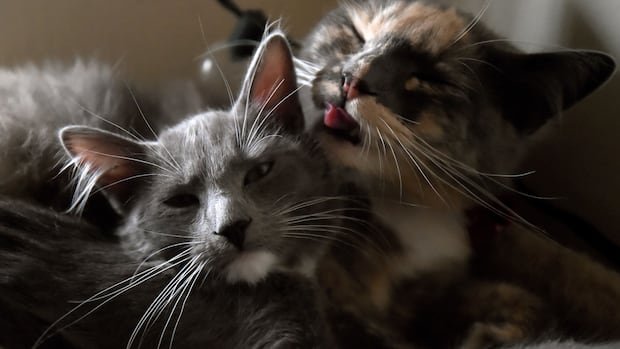
A recent study from Ghent University in Belgium delved into the world of cat behavior, specifically focusing on allogrooming, also known as mutual grooming. The research, led by Morgane Van Belle, a cat behavioral scientist at the university, sheds light on the different motivations behind cats grooming each other.
According to Van Belle, allogrooming can serve various purposes, from fostering social bonds to conveying passive-aggressive messages. The study, inspired by Van Belle’s own cats, observed that grooming interactions could range from affectionate to competitive.
The researchers analyzed videos from 53 households with multiple cats in Europe to understand the dynamics of allogrooming. They found that while some grooming sessions were positive and indicative of social bonding, others exhibited signs of conflict and competition.
Van Belle highlighted key differences between friendly grooming and confrontational grooming. Aggressive grooming often involves biting at the neck and asymmetrical body postures, signaling tension between cats. In contrast, friendly grooming results in mutual postures and relaxed expressions from the groomed cat.
Experts like Suzanne MacDonald, a psychology professor at York University, emphasized the importance of understanding these behaviors for cat owners. Recognizing the cues of allogrooming can help caregivers differentiate between affectionate interactions and potential conflicts, ultimately enhancing the well-being of their feline companions.
Allogrooming is not unique to cats, as other species like primates and horses also engage in this behavior for various reasons, such as social bonding and conflict resolution. Van Belle described aggressive allogrooming in cats as a subtle way to prevent more escalated conflicts, showcasing a delicate form of conflict resolution among feline companions.
Despite occasional displays of passive-aggressive grooming, Van Belle reassures cat owners that these interactions are part of the complex social dynamics between cats. Understanding the nuances of allogrooming can help foster positive relationships among cats and minimize potential conflicts in multi-cat households.