
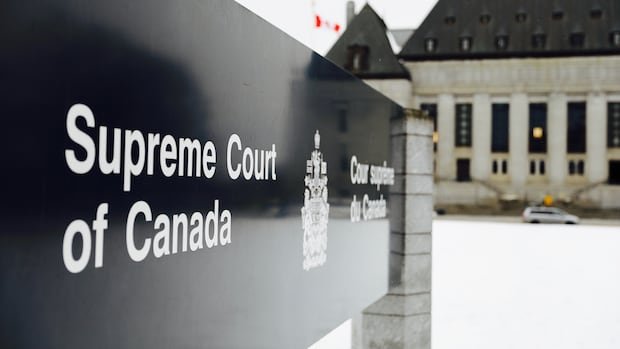
Lawyers representing the attorneys general of Canada and several provinces presented arguments to the Supreme Court of Canada on Tuesday in support of a Quebec law permitting police to conduct routine traffic stops without specific cause. On the other hand, civil rights groups are concerned that such stops contribute to racial profiling.
The Supreme Court dedicated another session to debate the constitutionality of police making traffic stops without reasonable suspicion of an offense. The case revolves around Joseph-Christopher Luamba, a young Black individual from Montreal who reported being repeatedly stopped by police without apparent justification while driving or riding in vehicles, with no resulting tickets.
In response to Luamba’s challenge, Quebec’s Superior Court declared the Quebec Highway Safety Code provision on random traffic stops as inoperative in 2022 due to concerns of racial profiling. This decision was upheld by the Court of Appeal in 2024. The Quebec government is now appealing this ruling, a case with potential nationwide ramifications.
During the court proceedings, Federal Justice Department lawyer Marc Ribeiro argued in favor of police having discretionary power to conduct random traffic stops to combat impaired driving. Ribeiro provided examples of scenarios where police may need to act swiftly based on observed circumstances without clear suspicion of an offense, emphasizing the importance of such discretion.
The court also heard from interveners such as civil rights groups, representatives of Black and Indigenous communities, police chiefs, and Mothers Against Drunk Driving. Discussions primarily focused on whether racial profiling is an inevitable outcome of allowing discretionary stops, a crucial factor in determining the law’s constitutionality.
Arguments were made for and against the law, with suggestions proposed by some parties to address profiling concerns through data tracking, improved victim recourse, and government declarations against discriminatory enforcement. While some emphasized the effectiveness of spot checks in detecting unsafe driving practices, others highlighted data indicating disproportionate stops of racialized individuals as evidence of profiling linked to the law.
The judges have taken the case under advisement, and a decision date has not been announced yet.