
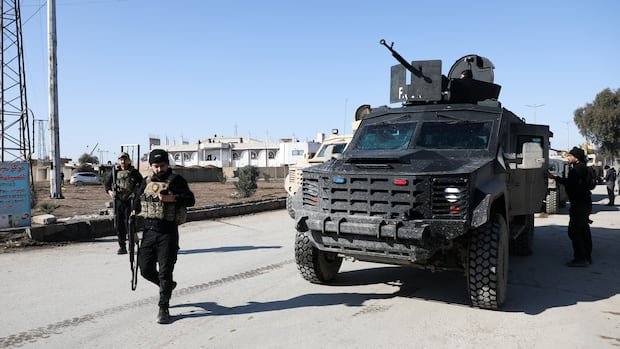
Syria declared a temporary halt in hostilities with Kurdish forces in the northeast on Tuesday, offering them four days to reach an agreement on becoming part of the central state. This move came after recent swift government advances and signals of reduced U.S. backing for the Syrian Democratic Forces (SDF), marking a significant shift in control since rebels ousted Bashar al-Assad over a year ago.
U.S. representative Tom Barrack characterized the proposal for Kurdish integration into the Syrian state, granting citizenship rights, cultural protections, and political involvement, as a pivotal opportunity for the Kurds. Barrack noted that the original purpose of the SDF, supported by the U.S. in combating the Islamic State, had largely been fulfilled, and the U.S. had no intention of maintaining a long-term presence in Syria.
The U.S. expressed “grave concern” over developments in Syria and called on all involved parties to engage in sincere negotiations. Emphasizing the need for restraint and protection of civilians from minority groups, the U.S. urged against actions that could escalate tensions.
The SDF confirmed acceptance of a ceasefire agreement with the Syrian government, agreeing not to initiate military actions unless provoked. A statement from the Syrian government outlined an accord with the SDF for the formulation of an integration plan for Hasakah province, warning of potential state forces entering two SDF-controlled cities if the plan is not submitted.
Northeast Syria, situated between Turkey and Iraq, is home to Kurds and Arabs and was previously under the control of the Islamic State before the SDF, aided by a U.S.-led coalition, drove them out. Concerns over the Kurdish YPG force, a key component of the SDF, were raised by Turkey, viewing it as linked to the PKK group that waged an insurgency in Turkey.
Since the overthrow of Assad in December 2024, Syria has been led by former rebel leader Ahmed al-Sharaa, a close ally of Turkey. The region remains sensitive to Ankara, with international attention drawn to SDF-guarded facilities detaining Islamic State militants and associated civilians.
In a separate development, approximately 200 low-level Islamic State fighters escaped Shaddadi prison when the SDF departed, but many were recaptured by Syrian government forces. The Syrian Interior Ministry reported that about 120 detainees escaped, with 81 recaptured. The SDF also withdrew from the al-Hol camp housing individuals linked to the jihadist group near the Iraqi border.
The Syrian military advanced in eastern parts of Hasakah province and south of Kobani, while the SDF retained control of Hasakah City and Qamishli. The government refrained from entering these cities during the ceasefire period, awaiting the SDF’s integration plan.
Tensions between the SDF and Damascus escalated this month due to disagreements over the group’s future. Following the SDF’s withdrawal from Raqqa and Deir al-Zor, government forces moved into Hasakah. Reports suggested a contentious meeting between SDF commander Mazloum Abdi and Sharaa, with the U.S. mediating between the parties.