
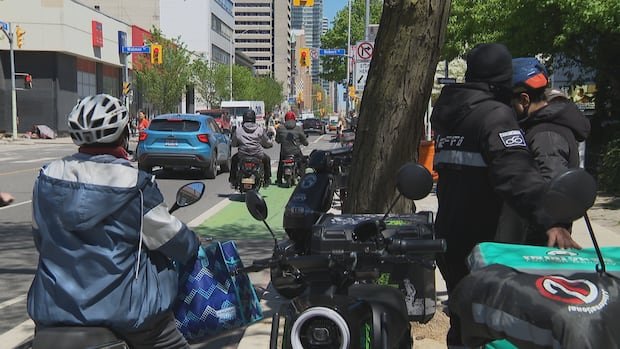
E-bikes have become increasingly prevalent in Toronto since being legalized in 2009, often seen in bike lanes or on sidewalks. However, the city has faced challenges in regulating their use, with safety issues such as battery fires and speeding being raised at council meetings.
Recently, the province has been reviewing its e-bike legislation to update rules on their use. The proposed changes aim to facilitate enforcement and provide clarity to riders regarding what is permitted on roads and bike lanes. The changes involve categorizing e-bikes into class 1 or 2 based on weight and power source, allowing municipalities to determine where each class can operate. Additionally, e-bikes that do not fit into these categories may require insurance and an M licence.
Meaghan Evans from the Ministry of Transportation highlighted the significant advancements in electric vehicle technology since the legalization of e-bikes in 2009, emphasizing the need for modernizing the regulatory framework to enhance road safety.
In the realm of politics, mayoral candidate Brad Bradford introduced a proposal targeting “dangerous e-bikes,” making them a focal point in the upcoming municipal election. The proposal includes measures such as banning motorized vehicles from bike lanes and creating a task force to oversee e-bike retailers. Mayor Olivia Chow also tabled a motion aligning with Bradford’s proposal, emphasizing the importance of preventing the sale of uncertified lithium ion batteries and exploring safe e-bike storage solutions in apartments.
Delivery couriers and e-bike retailers have expressed their views on the evolving regulations. Advocacy groups like Cycle Toronto and Bike Brigade have organized information sessions to educate riders on proper e-bike usage, particularly for delivery purposes. Parwaiz Nijrabi, an e-bike retailer, noted the need for updated regulations to address concerns about modified e-bikes exceeding speed limits.
Dr. Steve Lin, chief of the emergency department at St. Michael’s Hospital, supported the proposed classification and potential licensing of e-bikes, citing an increase in e-bike-related injuries. He emphasized the importance of ensuring safety measures while not restricting e-bikes from public use.
The ongoing discussions and proposed changes reflect the efforts to balance e-bike regulations with road safety and rider education in Toronto.