
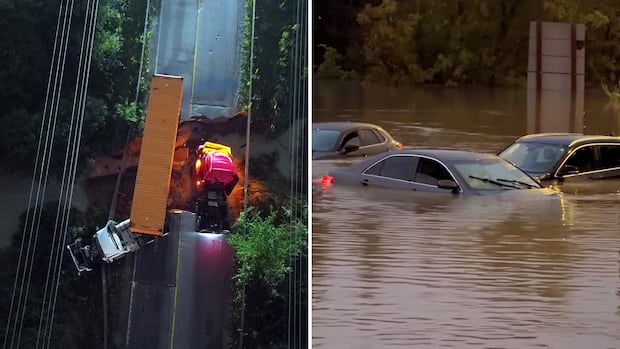
Last Wednesday, the skies over Toronto turned ominously dark in the afternoon, leading to a torrential downpour accompanied by fierce winds that uprooted trees and caused pedestrians to flee for shelter.
The following day, officials from the city of Toronto described the event as a “100-year storm,” while meteorologists confirmed that the rainfall equivalent to an entire month fell within just a few hours, making it the wettest September 2nd recorded.
How-Sen Chong, a representative from the Toronto Environmental Alliance, remarked that the storm was “supercharged” by climate change, cautioning that the city should prepare for more such events in the future. He pointed out that in the last 15 years, there have been four instances of these “100-year storms.”
Jason Thistlethwaite, a climate resilience and economic expert at the University of Waterloo, concurred that Toronto is likely to experience increasingly severe storms like the one from last week. He raised concerns about whether the significant tax dollars being allocated to combat flooding and other climate challenges are sufficient.
“We are attempting to adapt to climate change to some degree by reflecting on past events rather than looking forward with a full understanding of the projections,” Thistlethwaite stated.
CBC Toronto welcomed Chong and Thistlethwaite to our studio for an in-depth discussion about climate resilience in the aftermath of the storm and its implications for the upcoming municipal elections.
WATCH | The significant storm in September and the electoral issues it raises:
If you found this discussion interesting and would like to see more, you can check out our earlier episode outlining the stakes in the Toronto mayoral election here.
The Toronto city council has sanctioned a comprehensive climate strategy known as TransformTO. Nevertheless, Thistlethwaite points out that the council has yet to implement a stormwater tax, despite considering it multiple times. Such a tax could be levied on property owners, such as large impermeable parking lots, that exacerbate flooding and would create a specific fund to manage stormwater when required.
Stormwater charges have been a contentious topic at Toronto city hall, with opponents labeling them a “roof tax” or “rain tax” aimed at property owners, both commercial and residential.
Limited climate commitments from mayoral candidates
As of now, no candidate for mayor has committed to instituting such a charge if they are elected on October 26.
During the campaign trail last week, mayoral hopeful Brad Bradford expressed his support for Toronto’s current climate initiatives. He also criticized Mayor Olivia Chow for not enhancing those initiatives.
“This mayor hasn’t raised the ambition of these plans,” he told the press.
Bradford stated he would seek funding from other governmental levels to implement “big ticket moves,” similar to the revitalization project at the mouth of the Don River, which began under former mayor John Tory and was completed during Chow’s administration.
-
Video
Toronto mayor to speak after city hammered by powerful summer storm
-
‘Almost a month’s worth of rain’ in a day: Toronto’s thunderstorm aftermath includes rescues, outages
Chow’s campaign, which kicked off this week, did not answer inquiries regarding the potential release of a climate plan or the budget it would allocate for that plan over the next four years.
Chris Alexander “will have a commitment to this issue,” his campaign indicated in an email. Alexander is currently in third place in the latest public opinion polls.