
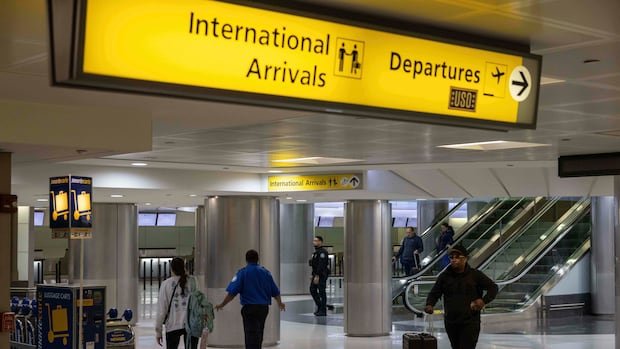
The Trump administration announced on Tuesday that it has temporarily halted the processing of all immigration applications, including those for green cards and U.S. citizenship, from 19 non-European countries. The decision was made due to concerns about national security and public safety.
This pause affects individuals from 19 countries that were already part of a partial travel ban implemented in June, which aimed to further restrict immigration—a key aspect of President Donald Trump’s political agenda. Among the countries included in the list are Afghanistan and Somalia.
The official memorandum detailing this new policy references the recent attack on U.S. National Guard members in Washington, where an Afghan man was arrested as a suspect. One member of the National Guard lost their life, and another was critically injured in the incident.
President Trump has recently intensified his rhetoric against Somalis, referring to them as “garbage” and stating that they are not welcome in the country. Despite this, around 80,000 Somalis reside in Minnesota, primarily in the Twin Cities metro area, contributing significantly to the region’s economy and culture.
Minneapolis Mayor Jacob Frey has emphasized that the majority of Somalis in the U.S. are American citizens, expressing concerns that any immigration actions could impact those who are legally present in the country.
In a separate move, Trump announced the immediate termination of temporary deportation protections for Somalis in Minnesota, alleging that “Somali gangs” were causing terror in the state, although no evidence or details were provided to support this claim. Local officials have disputed Trump’s portrayal, noting that 705 Somalis in the U.S. are under Temporary Protected Status according to government records.
The list of countries impacted by the new policy includes Afghanistan, Burma, Chad, the Republic of the Congo, Equatorial Guinea, Eritrea, Haiti, Iran, Libya, Somalia, Sudan, and Yemen. These nations were subject to severe immigration restrictions in June, resulting in a complete suspension of entries with limited exceptions. Additionally, countries like Burundi, Cuba, Laos, Sierra Leone, Togo, Turkmenistan, and Venezuela faced partial restrictions earlier.
Since resuming office in January, President Trump has been actively enforcing immigration laws, deploying federal agents to major cities and turning away asylum seekers at the U.S.-Mexico border. The administration’s recent focus on reshaping legal immigration, particularly after the National Guard attack, highlights a shift towards safeguarding national security and attributing blame to former President Joe Biden’s policies.
The new policy mandates a hold on pending applications and requires immigrants from the affected countries to undergo a thorough re-evaluation process, potentially including interviews, to assess national security and public safety risks fully. Recent crimes, such as the National Guard attack, were cited in the memorandum as reasons for these stringent measures.
Sharvari Dalal-Dheini, senior director of government relations at the American Immigration Lawyers Association, reported instances of canceled oath ceremonies, naturalization interviews, and adjustment of status interviews for individuals from countries listed in the travel ban.
The decision to pause immigration from these countries reflects the administration’s ongoing efforts to tighten immigration controls and prioritize national security concerns.