
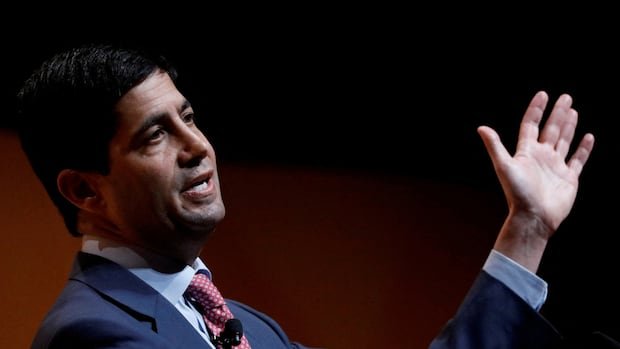
U.S. President Donald Trump announced on Friday his selection of former Federal Reserve official Kevin Warsh as his nominee for the next chair of the Fed. This decision is anticipated to lead to significant changes within the agency, potentially aligning it more closely with the White House. Warsh is set to succeed current chair Jerome Powell once his term concludes in May. While Trump initially appointed Powell in 2017, he has recently criticized him for not promptly reducing interest rates.
Expressing his confidence in Warsh, Trump posted on his Truth Social platform, stating, “I have known Kevin for a long period of time, and have no doubt that he will go down as one of the GREAT Fed Chairmen, maybe the best. On top of everything else, he is ‘central casting,’ and he will never let you down.”
The nomination of Warsh, who served on the Fed’s board from 2006 to 2011 and is currently affiliated with the Hoover Institution and Stanford Graduate School of Business, marks a significant move by the President. Despite Warsh’s historical inclination towards supporting higher interest rates to combat inflation, Trump has advocated for rates as low as one percent, a position not widely endorsed by economists.
Warsh has evolved his stance on interest rates, now favoring lower rates as evident in his recent speeches and opinion pieces. He emerged as the chosen candidate over other contenders such as Kevin Hassett, Rick Rieder, and Christopher Waller.
The announcement of Warsh’s nomination received mixed reactions from political figures. Prime Minister Mark Carney praised the decision, describing it as a “fantastic choice” for leading the central bank. In contrast, Democratic Senator Elizabeth Warren criticized Warsh’s past priorities concerning post-2008 financial crash recovery efforts. Republican Senator Thom Tillis reiterated his stance on withholding support for any nomination until the Department of Justice concludes its investigation into Powell.
Trump’s selection of Warsh signifies a step towards exerting more influence over the Federal Reserve, challenging its longstanding independence. The Fed chair holds a pivotal role in shaping the nation’s economic policies, from controlling inflation to regulating the banking sector.
Warsh’s potential appointment reflects Trump’s desire to steer the Fed towards accommodating lower interest rates, aligning with his economic agenda. However, Warsh’s ability to implement significant rate cuts may face obstacles within the Fed’s rate-setting committee and potential resistance from financial markets.
Warsh’s background includes serving in George W. Bush’s administration, working as an investment banker at Morgan Stanley, and collaborating closely with former Fed Chair Ben Bernanke during the financial crisis. Despite past concerns regarding inflation risks, Warsh has since shifted his criticisms towards the Fed’s broader engagements beyond monetary policy.
The nomination of Warsh by Trump underscores the President’s ongoing efforts to shape economic policies and the trajectory of the Federal Reserve.