
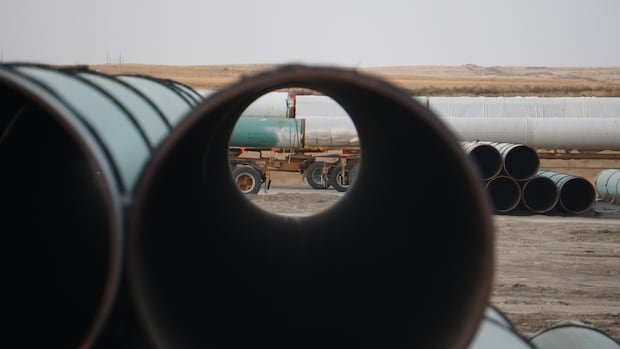
U.S. President Donald Trump has hinted at the revival of the Keystone XL pipeline project, which was previously scrapped by former administrations. Trump’s comments came as part of a new trade agreement with Canada, announced just before imposing new tariffs on Canadian imports. The potential resurrection of the pipeline has sparked political speculation rather than being solely driven by economic motives, according to experts familiar with the situation.
Dennis McConaghy, a former executive at TransCanada Corporation (now TC Energy), views Trump’s mention of the Keystone XL project in the context of ongoing trade negotiations. Since initiating tariffs on Canadian goods in early 2025, Trump has been vocal about minimizing dependencies on Canadian products, although certain commodities like oil have remained exempt from tariffs.
While some industry insiders see Trump’s statement as a positive signal, others like Carlo Dade from the University of Calgary caution that reviving the Keystone XL project could face significant political and environmental obstacles in the current climate, especially with potential changes in U.S. leadership.
Valérie Beaudoin, part of the federal Advisory Committee on Canada-U.S. Economic Relations, believes that the decision to move forward with Keystone XL would pose challenges for both the current and future administrations. The discussions around reviving the project are perceived as a response to past policies and a strategic move rather than a straightforward economic decision.
The Keystone Pipeline System, owned by South Bow Corp., plays a crucial role in transporting Canadian and U.S. crude oil to American refineries. With the possibility of the Prairie Connector project utilizing parts of the Keystone XL infrastructure, there is renewed interest in enhancing Canada’s crude oil exports to the U.S. market. However, the final decision on proceeding with the Prairie Connector project is still pending.
South Bow’s CEO, Bevin Wirzba, has emphasized the sustained demand for Canadian crude in the U.S. market, showcasing substantial commitments from multiple customers for potential oil transportation services. The company’s focus on long-term value and connectivity to refining and export markets underscores the importance of maintaining strong ties between Canada and the U.S. in the energy sector.