
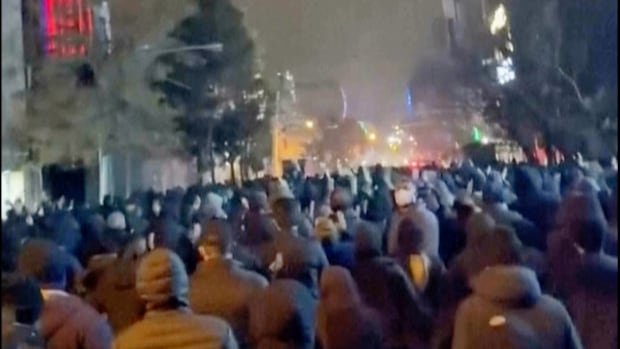
U.S. President Donald Trump has expressed openness to engaging with Iranian officials and has been exploring various responses, including military options, in reaction to the recent violent suppression of protests in Iran. The unrest represents a significant challenge to the clerical rule established after the 1979 Islamic Revolution.
“Iranian Foreign Minister Abbas Araqchi stated that they are prepared for both conflict and dialogue while addressing foreign ambassadors in Tehran,” said Araqchi during a briefing, emphasizing that the situation in Iran is now stable following a surge in violence during the protests.
Communications between Araqchi and U.S. special envoy Steve Witkoff continue, with additional channels open through intermediary Switzerland, according to Foreign Ministry spokesperson Esmaeil Baghaei. President Trump has cautioned Iranian leaders against using force on demonstrators, warning of potential U.S. intervention.
An American human rights organization, HRANA, confirmed the deaths of 490 protesters and 48 security personnel, with over 10,600 individuals detained. Official casualty figures from Iran are not available, with an ongoing internet blackout preventing independent verification.
Despite the widespread protests, there is no apparent division within the Shia clerical establishment or security forces in Iran. The opposition lacks centralized leadership and remains fragmented.
President Trump mentioned that Iran has shown interest in negotiating its nuclear program, which was previously targeted in a military conflict involving Israel and the U.S. The Iranian authorities have accused the U.S. and Israel of instigating unrest and have called for nationwide counter-protests.
Discussions are underway within the U.S. government regarding potential actions against Iran, including military strikes, cyber warfare, expanded sanctions, and support for anti-government factions. However, targeting military sites could pose significant risks, potentially leading to civilian casualties due to the presence of elite forces in densely populated areas.
Iranian Parliament Speaker Mohammad Baqer Qalibaf cautioned against provocation by the U.S., warning of retaliatory measures targeting U.S. bases and allies in the event of an attack. Despite their threats, Iran’s regional influence has diminished following recent conflicts and losses suffered by allied groups like Lebanon’s Hezbollah.
The protests in Iran, triggered by economic hardships, have evolved into broader anti-government demonstrations. The Iranian populace, facing economic challenges, has grown disillusioned with the Revolutionary Guards, whose significant business interests have fueled discontent.
Efforts to restore internet access in Iran have been discussed, with Trump mentioning a potential conversation with Elon Musk to leverage Starlink satellite technology. Araqchi indicated that internet services would be reinstated in coordination with security measures.
Additionally, European ambassadors in Tehran were summoned and urged to convey Iran’s request for their governments to withdraw support for the protesters.