
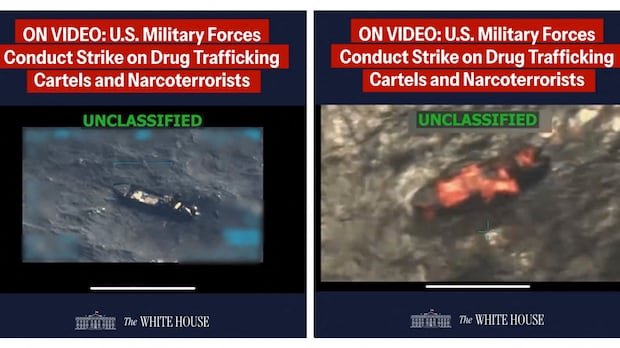
A U.S. military aircraft disguised as a civilian plane was used in an operation targeting a drug-smuggling boat near Venezuela’s coast. The plane, part of a secretive U.S. fleet conducting surveillance missions, carried munitions inside its fuselage, deviating from standard military protocols. This information, initially reported by the New York Times, was confirmed by anonymous sources familiar with the situation.
The Pentagon has defended the use of various aircraft based on mission requirements. The recent revelations follow the Trump administration’s military escalation against Venezuela, including attacks on alleged drug-smuggling vessels and the subsequent capture of Venezuelan leader Nicolás Maduro and his wife on federal drug trafficking charges.
Concerns over these actions have prompted the U.S. Senate to consider a war powers resolution to limit further military involvement in Venezuela without congressional approval. President Trump has vigorously engaged with Republican senators to deter support for the resolution, emphasizing the administration’s stance on combating drug cartels in the region.
Despite the administration’s justification for the boat strikes as part of an armed conflict with drug cartels, military guidelines prohibit the use of civilian disguise during combat, known as “perfidy.” The U.S. military manuals explicitly prohibit feigning civilian status to engage in combat operations, emphasizing the importance of adhering to the laws of war and military honor.
Questions have arisen regarding the legality of the military actions, especially the follow-up strike that targeted survivors of a previous attack. Legal experts and lawmakers have called for transparency, urging the Pentagon to release unedited video footage of the operations. Lawmakers were briefed on the legal justification for Maduro’s ouster in a classified session, with concerns raised about the ongoing military involvement and governance plans for Venezuela.
The debate surrounding the military actions in Venezuela continues as legal and constitutional arguments are scrutinized, highlighting the complexities and implications of the Trump administration’s approach to the situation.