
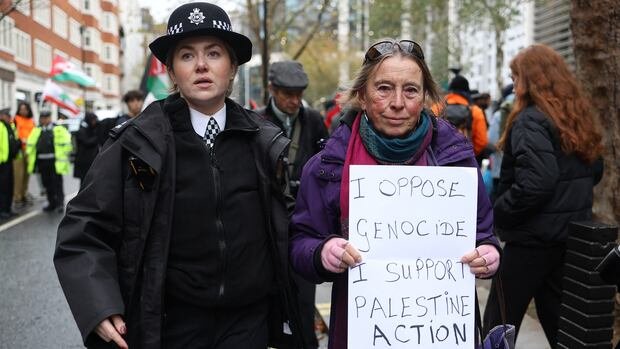
Britain’s High Court has ruled that the U.K. government unlawfully labeled the protest group Palestine Action as a terrorist organization. This decision, which led to the arrests of numerous peaceful protesters, was deemed significant by Yasmine Ahmed, the U.K. director of Human Rights Watch. Despite the court ruling, the ban on Palestine Action remains in place pending the government’s appeal, leaving the fate of protesters charged under the Terrorism Act uncertain.
Palestine Action co-founder Huda Ammori hailed the court decision as a monumental victory for both British freedoms and the Palestinian cause. In contrast, Home Secretary Shabana Mahmood expressed disappointment with the ruling, vowing to challenge it. The Jewish organizations Board of Deputies of British Jews and the Jewish Leadership Council voiced deep concerns over the court decision, citing the impact of Palestine Action’s activities on the Jewish community.
Palestine Action’s opposition to British military support for Israel’s offensive in Gaza has been a point of contention. Following a break-in at a Royal Air Force base and vandalism of aircraft, the group was designated a terrorist organization, leading to arrests and charges under the Terrorism Act. The court judges deemed the terrorism designation disproportionate to the actual threat posed by Palestine Action, giving lawyers until Feb. 20 to prepare for the next hearing.
Human Rights Watch criticized the law, stating it infringes on fundamental rights to speech and assembly. Ahmed emphasized the distress faced by those arrested or charged under terrorism offenses and urged swift court action. The ongoing legal battle highlights the complexities surrounding free speech, protest rights, and national security concerns.