
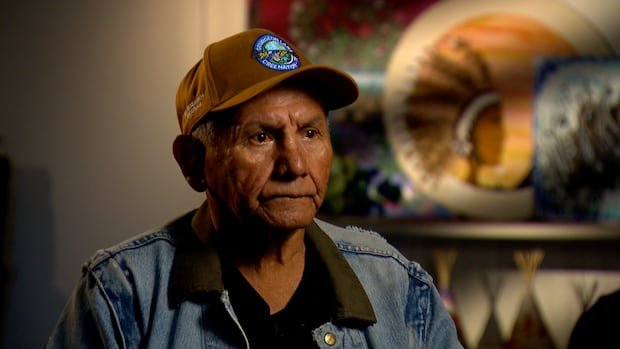
In 1943, Johnny Kiyawasew passed away at a small hospital in northern Alberta at the age of 11, far from his family in Sturgeon Lake Cree Nation. Johnny, who was compelled to attend the St. Francis Xavier Residential School in Calais, never returned home, leaving his loved ones unaware of his fate for many years. Robert Kiyawasew, Johnny’s younger brother, expressed frustration at the lack of communication from the church regarding Johnny’s passing.
After a prolonged search, Johnny’s gravesite was eventually discovered in 2013 by his sister Roseann, with the assistance of a private investigator. Records indicate that Johnny succumbed to pulmonary tuberculosis at a hospital in High Prairie, where he was laid to rest, a considerable distance from the residential school. Presently, the Sturgeon Lake Cree Nation and the University of Alberta are engaged in an extensive research initiative to unveil the stories of children like Johnny, who attended residential schools but never made it back home.
Chief Sheldon Sunshine of Sturgeon Lake Cree Nation revealed that research findings point to numerous children at St. Francis Xavier dying from tuberculosis and malnutrition, emphasizing the human impact behind the data. Robert Kiyawasew expressed gratitude that his sister was able to locate Johnny’s grave before her passing, reflecting on the poignant sight of the solitary burial site.
As a survivor of a day school himself, Robert Kiyawasew recounted similar hardships faced by his siblings at St. Francis Xavier, highlighting the erasure of Native identity and cultural heritage. The challenges of accessing accurate residential school records were underscored by Raymond Frogner, who described the fragmented and unreliable nature of such archives, managed by disparate entities that rarely collaborated.
Sunshine lamented the hurdles faced by Sturgeon Lake researchers in obtaining crucial documents from church authorities, hindering efforts to uncover the fates of students like Johnny. Despite these challenges, the First Nation remains committed to piecing together the narratives of children who never returned from residential schools, recognizing the importance of closure and healing for affected families grappling with intergenerational trauma.