
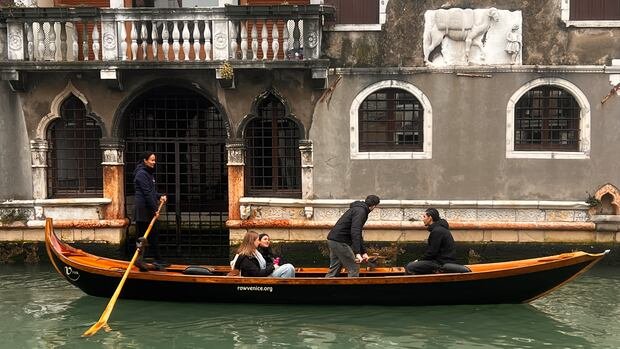
In Venice, a city known for its timeless charm, ancient palazzos are mirrored in narrow canals, where water dictates daily life. Despite its allure, Venice faces a tourism influx, with over 25 million annual visitors, mostly day-trippers seeking quick snapshots and gondola rides at Piazza San Marco.
Away from the bustling square, tranquility prevails. Female rowers skillfully maneuver a “shrimp-tailed” batèla, a traditional boat designed for navigating the city’s shallow canals. Unlike the iconic gondola, the batela served as a practical vessel for transporting goods and people, crafted with a flat bottom to suit the canal’s shallow depths.
Elena Almansi, a Venice native and rowing champion, embodies the city’s rowing legacy. As a member of Row Venice, a non-profit organization promoting Venetian rowing techniques, Almansi and her fellow female rowers preserve the artistry of voga alla veneta, the traditional rowing style used by gondoliers.
The rowing culture in Venice, historically male-dominated, has gradually opened up to women like Almansi and her peers. Initially facing resistance from traditionalists, they persevered, reviving rare batela replicas and advocating for gender equality in rowing competitions.
With a new generation, such as university student Viola Ghigi, embracing Venetian rowing traditions, the legacy continues. Ghigi, raised in a rowing family, emphasizes the importance of upholding these customs to prevent Venice from becoming a mere tourist attraction.
In a city grappling with depopulation and tourism pressures, Row Venice distinguishes itself as a guardian of tradition rather than a competitor to gondoliers. For these dedicated women, rowing is not just a pastime but a vocation deeply rooted in Venetian heritage.
Recognized by Italy’s national Olympic committee, the association’s instructors reinvest lesson proceeds to empower female rowers in a realm traditionally dominated by men. As Almansi propels the batela forward, slicing through the canal’s reflections, these women symbolize progress in a city often criticized for inertia.