
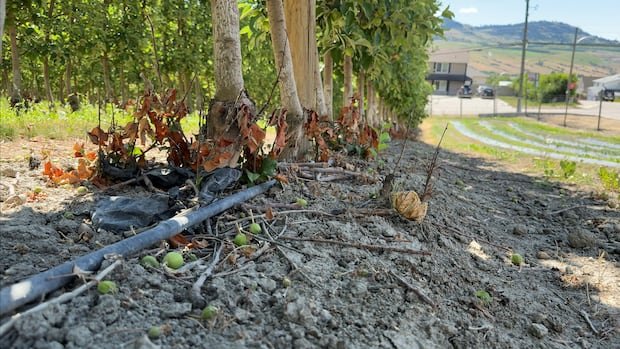
Farmers in Vernon are adapting to water restrictions established in the area. The Stage 3 restrictions were mandated by the Regional District of the North Okanagan and the Greater Vernon Water Utility due to critically low reservoir and lake levels. One of the requirements under these restrictions is a 70% compulsory reduction in water usage for all farmers.
Adrian Arts, a farmer and the executive director of the B.C. Fruit Growers’ Association, expressed concerns about the proposed water reduction, stating that such a drastic cut would harm trees, potentially causing long-term damage or death in orchards. The B.C. Fruit Growers’ Association is urging government support to sustain the future of agriculture in B.C., highlighting the ongoing challenges faced by farmers, including past incidents like the heat dome and deep freeze.
After the restrictions were put in place in early June, discussions were held between the regional district, Greater Vernon Water, and major water users, many of whom are farmers. David Sewell from the Regional District of North Okanagan mentioned that farmers have the option to share and redistribute their water allocation with others, with some farmers already engaging in these negotiations.
Amanda Summerfelt, the water efficiency coordinator at Greater Vernon Water, noted that the community has been largely compliant with the restrictions, which include a ban on non-essential activities like lawn watering, pool filling, and boat washing. People have also been encouraged to reduce overall water usage by 50%. Measures have been taken to keep certain sports fields operational, allowing sprinklers to run within specific areas.
Some entities in the region, such as golf courses, utilize reclaimed water from wastewater treatment plants, which is not subject to the restrictions. Summerfelt reported a significant 48% decrease in water consumption in the Greater Vernon area since the implementation of the restrictions. Additionally, residents in the Lavington area have been temporarily transitioned to an alternative water source to prioritize surface water for agricultural needs.
Overall, the community response to the water restrictions has been positive, with efforts being made to ensure sustainable water usage and support the agricultural sector in the face of ongoing challenges.