
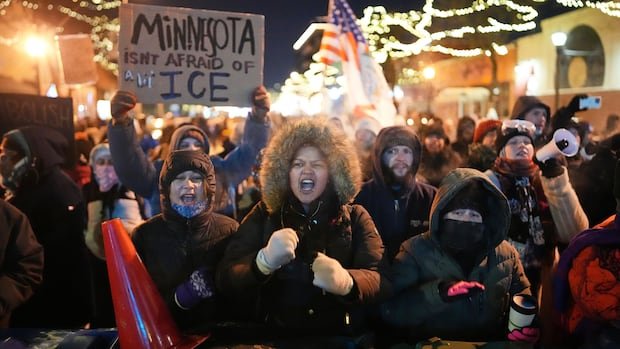
Even prior to the recent fatal shooting involving a federal immigration officer in Minneapolis that resulted in the death of 37-year-old Alex Pretti, U.S. Vice-President JD Vance expressed his observations about the city’s unique circumstances. During a visit to Minneapolis and St. Paul on Thursday, Vance questioned the absence of similar levels of unrest in cities that have experienced immigration law enforcement crackdowns, suggesting that Minneapolis may have distinct challenges. Vance also called for local authorities to collaborate with federal immigration enforcement efforts.
Minnesota’s rich history of protests dating back to the 1890s, along with the significant role the twin cities have played in labor and civil rights movements, may offer insights into the current situation. Notably, the tragic events of the Teamsters strike in 1934, where two demonstrators were fatally shot, marked a turning point that led to the enactment of the National Labor Relations Act.
Local historians draw parallels between past events and the ongoing developments in Minneapolis. The strong pro-labor sentiments in Minnesota were evident as 20,000 individuals defied extreme cold warnings to protest against Immigration and Customs Enforcement (ICE), emphasizing the cities’ labor-friendly stance. The historical roots of organized labor actions in Minnesota, such as the Great Northern Railroad Strike of 1894 and the Teamsters strike of 1934, demonstrate a legacy of successful labor movements in the state.
The integrated community approach to anti-ICE protests in Minneapolis today reflects past efforts in the civil rights movement. An interconnected network of volunteers from various organizations is engaged in activities like ICE neighborhood watches and providing support to vulnerable immigrant populations. The historical precedent of neighborhood patrols from the 1960s, involving diverse groups collaborating to protect their communities, resonates with the current community initiatives.
The city’s recent history of protest, exemplified by the death of George Floyd in 2020, has further fueled grassroots organizing and activism. The aftermath of Floyd’s killing spurred a wave of racial justice protests nationwide, leading to sustained community networks and mobilization efforts. The diversity of participants and the range of actions available for involvement highlight the inclusive nature of the current movement in Minnesota.
Overall, the ongoing protests in Minneapolis reflect a deep-rooted tradition of activism and community engagement, drawing from historical labor strikes, civil rights movements, and recent social justice movements to address contemporary challenges.