
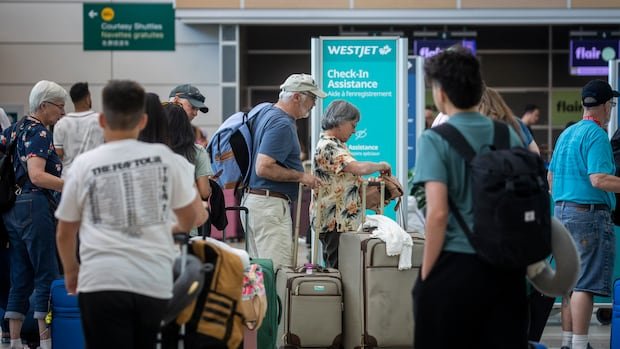
WestJet’s flight attendants are gearing up for a potential strike as early as Sunday if an agreement is not reached by then, causing concern among passengers. The Canadian Union of Public Employees (CUPE), representing WestJet’s 4,400 flight attendants, issued a 72-hour strike notice on Thursday. In response, WestJet issued a 72-hour lockout notice.
Although a strike notice does not automatically lead to a walkout, there are significant differences between the two sides on crucial matters, according to a union spokesperson. Passengers like Ken Wallin fear that their travel plans might be disrupted. Wallin and his wife are scheduled to fly to Ireland to celebrate their 29th wedding anniversary on Monday, a trip they have been eagerly anticipating after canceling their previous vacation due to the pandemic.
In the event of a strike affecting their flight, it would mean another disappointment for the couple. Despite considering booking with another airline, Wallin has struggled to find direct flights at reasonable prices. While WestJet is allowing passengers with bookings between July 30 and Aug. 4 to switch or cancel without charges, Wallin is only offered a travel credit, which is not ideal for him as an infrequent flyer.
Meanwhile, some travelers like Armin Ataee have no choice but to make alternative arrangements. Ataee had to rebook his return flight to Vancouver with another airline to ensure he could make a conference next week. Although he accepted the WestJet credit, he had to pay an extra $200 for the last-minute booking back to Vancouver.
WestJet has reiterated that certain passengers can rebook or cancel flights without fees. However, only passengers with specific bookings, such as PremiumFlex and BusinessFlex flights, can receive a refund to their original payment method. Travelers who booked through third-party agencies will need to make changes directly with the booking agency.
As negotiations continue, both sides are under pressure to reach a resolution. This high-pressure environment often leads to last-minute agreements that avert strikes, according to labor experts. The main point of contention remains fair pay, with flight attendants arguing that a significant portion of their work goes unpaid under the current credit hour system. WestJet maintains that this pay structure is industry standard and compensates flight attendants adequately for their duties.