
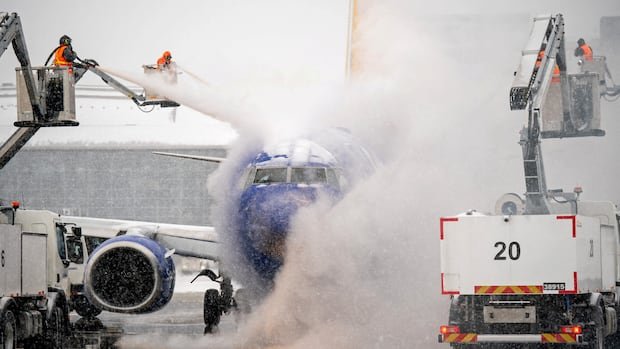
A significant winter storm persisted in the United States on Sunday morning, bringing freezing rain, sleet, and snow from southern states to New England. The storm led to frigid temperatures, power outages, and hazardous road conditions. The U.S. National Weather Service warned that the icy and snowy conditions would persist through Monday, followed by very low temperatures, resulting in prolonged travel hazards and infrastructure issues.
The storm was forecast to bring heavy snow from the Ohio Valley to the northeast, with the potential for “catastrophic ice accumulation” from the Lower Mississippi Valley to the mid-Atlantic and southeast regions. Meteorologist Allison Santorelli described the storm as unique due to its widespread impact, affecting areas spanning over 2,000 miles from New Mexico to New England.
As of Sunday morning, approximately 213 million people were under winter weather warnings, with nearly 840,000 customers experiencing power outages, a number that continued to rise. Seventeen states and the District of Columbia declared weather emergencies, with the Department of Homeland Security cautioning Americans to prepare for the extreme cold by stocking up on essentials.
The Department of Energy issued emergency orders to ensure backup resources for electricity generation in Texas and the mid-Atlantic region. The National Weather Service highlighted the potential for widespread heavy ice accumulation in the southeast, with “crippling to locally catastrophic impacts” expected. Record cold temperatures and dangerous wind chills were forecast for the Great Plains region by Monday.
Over 10,000 flights were canceled on Sunday, with another 8,000 delayed, affecting major hubs like Philadelphia, Washington, D.C., and New York. The storm’s aftermath was expected to bring bitter cold across the eastern U.S., slowing down melting processes and hindering restoration efforts for power and infrastructure. Areas like Nashville experienced significant ice accumulations, leading to widespread power outages.
In Oxford, Mississippi, dangerous conditions prompted utility crews to halt operations, emphasizing the severity of the storm. Icy roads made travel treacherous in north Georgia, with even popular establishments like Waffle House closing due to the extreme weather conditions. The “Waffle House Index” became a notable indicator of severe weather situations in the U.S. South.