
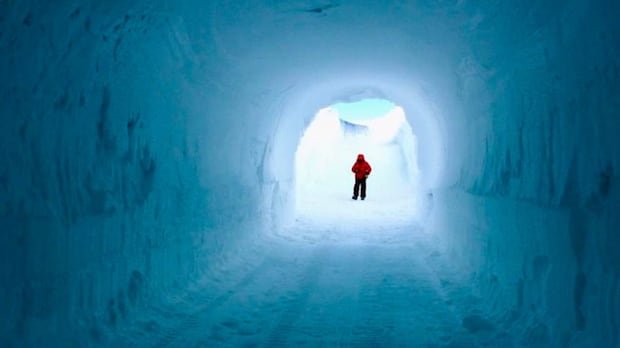
Scientists have recently established the world’s first central repository for mountain ice cores in Antarctica to safeguard the Earth’s atmospheric history amid global glacier melting caused by climate change. These ice cores act as time capsules, preserving valuable data on past atmospheric conditions. To prevent the loss of this crucial information, scientists have expedited the collection and storage of ice cores from Alpine regions such as Mont Blanc in France and Grand Combin in Switzerland, now housed in a secure snow cave at the Concordia research station on the Antarctic Plateau.
The Ice Memory Foundation, a collaboration of European research organizations, officially unveiled this frozen sanctuary following the arrival of 1.7 tonnes of ice samples from Italy after a 50-day refrigerated journey. By preserving physical samples of atmospheric components like gases, aerosols, and pollutants trapped in ice layers, the foundation aims to enable future researchers to analyze past climate conditions using advanced technologies that may be developed in the future.
Launched in 2015, the Ice Memory project involves various research institutions from France, Italy, and Switzerland. With ten glacier sites already identified and ice cores extracted, plans are underway to transport these samples to the Antarctic cave for long-term preservation. The ultimate goal is to establish an international agreement over the next decade to ensure the protection and accessibility of these ice core samples for future scientific study.
As global temperatures continue to rise, glaciers are rapidly diminishing, resulting in the loss of critical atmospheric data. The foundation highlights that glaciers have shrunk regionally by up to 39% since 2000, contributing to a 5% global reduction in ice cover. These ice cores serve as vital reference points for understanding the pace and causes of environmental changes, emphasizing their significance in current and future climate research endeavors.